
Why Black Walnut Is One of the Most Valuable Hardwoods
Why Black Walnut Is One of the Most Valuable Hardwoods
Black walnut is one of the most valuable hardwoods because of its rich natural color, distinctive grain, durability, limited availability, and excellent workability. It has long been prized by furniture makers, woodworkers, and homeowners for creating high-end dining tables, live edge slabs, cabinetry, mantels, and custom furniture that can last for generations.
What Makes Black Walnut So Special?
Among all North American hardwoods, few species enjoy the same reputation as black walnut.
For centuries, artisans have used walnut to craft luxury furniture, architectural millwork, musical instruments, and heirloom-quality pieces that stand the test of time.
Unlike many woods that require stain to achieve a premium appearance, black walnut naturally features rich chocolate-brown tones, elegant grain patterns, and remarkable character straight from the tree.
Its combination of beauty and performance explains why it remains one of the most sought-after hardwoods in 2026.
Rich, Natural Color That Needs Little Enhancement
One of black walnut's greatest strengths is its natural appearance.
The heartwood ranges from medium brown to deep chocolate, often accented by subtle purple, gray, or golden undertones.
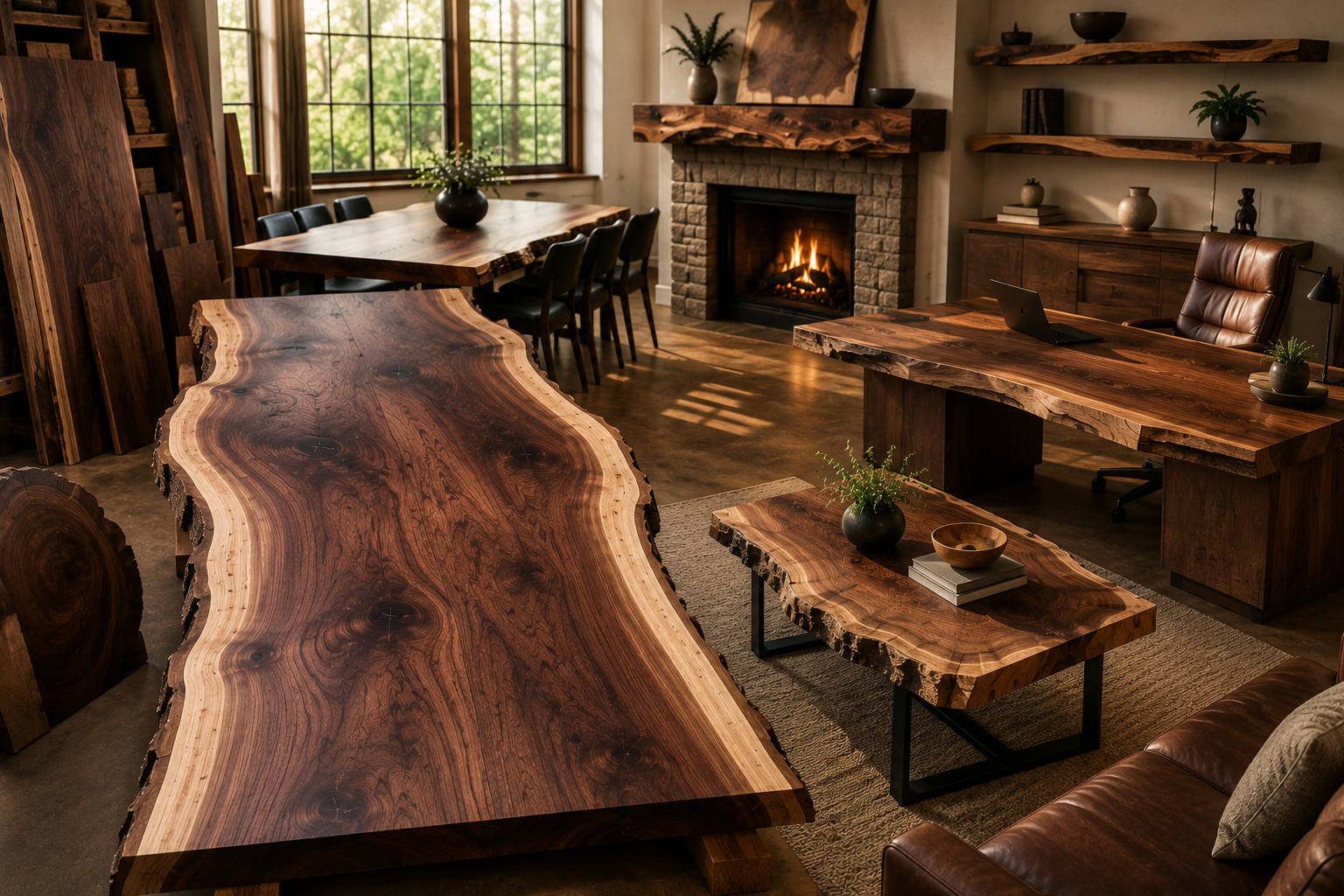
Many slabs also feature creamy sapwood along the edges, creating a striking contrast that adds visual interest to custom furniture.
Unlike lighter woods that are frequently stained, walnut often requires only a clear protective finish to showcase its beauty.
Every Board Has a Unique Grain Pattern
No two black walnut boards are identical.
Depending on the tree, you'll find:
Cathedral grain
Wavy grain
Curly figure
Feather patterns
Swirling grain
Natural knots
Color variation
These distinctive characteristics make every project unique, especially when using live edge slabs.
For homeowners seeking one-of-a-kind furniture, walnut is difficult to surpass.
Exceptional Durability
Black walnut is valued not only for its appearance but also for its strength.
It offers:
Excellent structural stability
Good resistance to everyday wear
Long service life
Reliable performance indoors
When properly kiln-dried and finished, walnut furniture can remain beautiful and functional for decades.
Outstanding Workability
Professional woodworkers appreciate walnut because it's easier to machine than many other premium hardwoods.
It:
Cuts cleanly
Sands smoothly
Holds detailed carvings well
Glues effectively
Accepts a wide range of finishes
This makes black walnut suitable for everything from simple shelves to intricate custom cabinetry.
Limited Supply Increases Its Value
Unlike fast-growing softwoods, black walnut trees require many decades to reach maturity.
Large trees capable of producing wide, furniture-grade slabs are relatively uncommon.
This limited supply, combined with consistently high demand, contributes significantly to walnut's premium price.
Extra-wide live edge slabs and highly figured boards are particularly valuable because they're much harder to source.
A Favorite for Live Edge Furniture
Black walnut has become one of the most popular choices for live edge woodworking.
Its naturally flowing grain and rich color pair beautifully with the organic shape of the tree's outer edge.
Common live edge projects include:
Dining tables
Coffee tables
Executive desks
Conference tables
Fireplace mantels
Kitchen islands
Floating shelves
Benches
Each slab preserves part of the tree's natural form, creating furniture that's both functional and artistic.
Excellent Stability for Indoor Furniture
Properly kiln-dried walnut performs exceptionally well in climate-controlled homes.
Compared with improperly dried lumber, kiln-dried walnut is less likely to:
Warp
Twist
Cup
Shrink excessively
Develop structural cracks
This stability makes it an excellent choice for custom furniture and architectural projects.
Timeless Design Appeal
Design trends come and go, but black walnut continues to remain in demand.
Its versatility allows it to complement numerous interior styles, including:
Modern
Contemporary
Farmhouse
Rustic
Industrial
Scandinavian
Transitional
Whether paired with black steel, brass, glass, or natural stone, walnut adds warmth and sophistication.
Sustainable When Responsibly Sourced
Many reputable hardwood suppliers harvest black walnut through responsible forestry practices.
Sustainably managed forests help ensure future generations can continue enjoying this remarkable species while maintaining healthy woodland ecosystems.
When purchasing walnut, look for suppliers who are transparent about their sourcing practices.
Common Uses for Black Walnut
Black walnut is frequently used to create:
Live edge dining tables
Coffee tables
Conference tables
Custom desks
Kitchen islands
Floating shelves
Fireplace mantels
Cabinets
Cutting boards
Decorative wall shelves
Window benches
Its combination of beauty and durability makes it suitable for both residential and commercial applications.
Black Walnut vs Other Popular Hardwoods
HardwoodNatural ColorGrainDurabilityBest ForBlack WalnutDeep brownBold and decorativeExcellentLuxury furniture, live edge slabsWhite OakLight to medium brownProminentExcellentTables, flooring, cabinetryMapleCream to light goldenFine and smoothOutstandingCountertops, desks, cabinetsCherryWarm reddish brownElegantVery GoodTraditional furnitureAshLight brownOpen grainVery GoodModern furniture, shelving
While each hardwood has its strengths, black walnut remains the preferred choice for homeowners seeking a premium, heirloom-quality appearance.
Is Black Walnut Worth the Higher Price?
For many buyers, the answer is yes.
Although walnut typically costs more than common hardwoods, the investment offers several long-term benefits:
Timeless appearance
Greater uniqueness
Excellent resale appeal
Long service life
High-quality craftsmanship
Natural elegance without heavy staining
Furniture built from walnut often becomes a centerpiece that's appreciated for generations.
Tips for Buying Quality Black Walnut
When shopping for walnut lumber or live edge slabs:
Choose kiln-dried wood for indoor projects.
Review photos of the actual board or slab.
Inspect the grain pattern.
Confirm dimensions carefully.
Ask about moisture content.
Purchase from a reputable hardwood supplier.
Taking these steps helps ensure you receive premium-quality material.
Common Mistakes to Avoid
Buying Based Only on Color
While dark heartwood is desirable, don't overlook the beauty of grain, figure, and natural character.
Ignoring Moisture Content
Proper drying is just as important as the wood species itself.
Kiln-dried walnut generally offers greater stability for indoor furniture.
Choosing the Cheapest Option
Lower-priced walnut may include defects, excessive sapwood, or inadequate drying.
Investing in higher-quality lumber often results in better long-term value.
Overlooking the Intended Use
Choose slab dimensions, thickness, and grain based on the specific project you're building rather than appearance alone.
Frequently Asked Questions
Why is black walnut more expensive than other hardwoods?
Black walnut grows slowly, mature trees are relatively scarce, and demand for premium lumber remains consistently high. These factors contribute to its higher market value.
Is black walnut stronger than oak?
White oak is generally harder than black walnut, but walnut still provides excellent durability and is more than strong enough for most furniture applications.
Does black walnut require staining?
Usually not. One of walnut's greatest advantages is its naturally rich color, which is often enhanced with a clear finish rather than stain.
Is black walnut a good investment for furniture?
Yes. High-quality black walnut furniture is known for its timeless appearance, durability, and lasting value, making it a popular choice for heirloom-quality pieces.
Conclusion
Black walnut has earned its reputation as one of the world's most valuable hardwoods through a rare combination of natural beauty, strength, workability, and scarcity. Its rich color, distinctive grain, and remarkable durability make it a favorite among woodworkers, designers, and homeowners who appreciate craftsmanship that lasts.
Whether you're building a live edge dining table, a custom office desk, floating shelves, or a fireplace mantel, choosing black walnut means investing in a material that offers elegance, reliability, and timeless appeal. With proper care and finishing, a black walnut project can become a cherished centerpiece that's enjoyed for generations.
