
Are PVC Reptile Enclosures Safe for Reptiles?
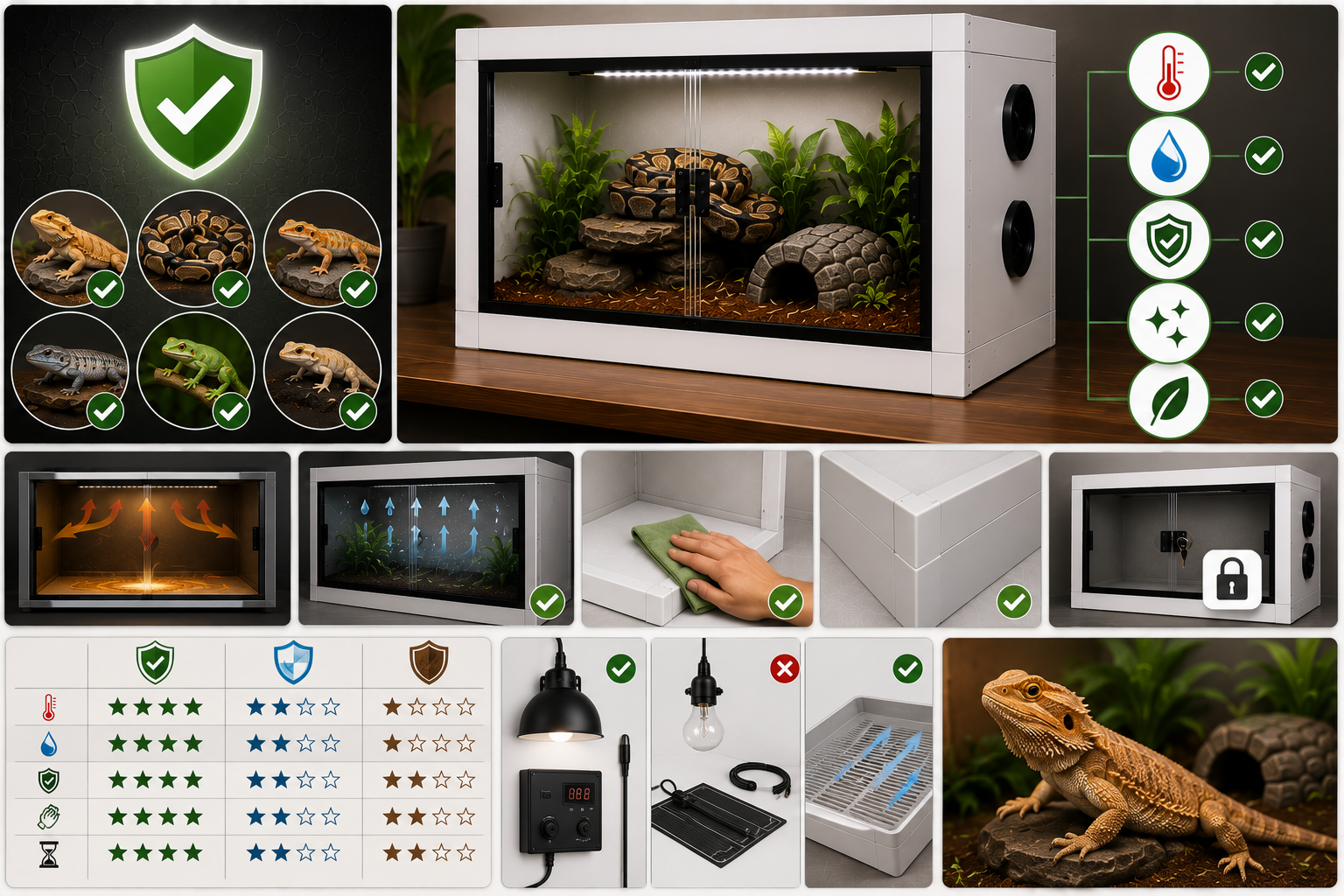
Are PVC Reptile Enclosures Safe for Reptiles?
Yes,PVC reptile enclosures are generally considered very safe for reptiles when purchased from reputable manufacturers and used correctly. PVC is widely used in the reptile industry because it is durable, moisture-resistant, easy to clean, and capable of maintaining stable temperatures and humidity levels.
In fact, many experienced reptile keepers consider PVC one of the safest and most practical enclosure materials available today.
Why PVC Is Popular for Reptile Housing
PVC (Polyvinyl Chloride) has become increasingly popular because it offers several advantages that directly support reptile health and husbandry.
Benefits include:
Excellent heat retention
Reliable humidity control
Durable construction
Easy cleaning and disinfection
Resistance to moisture damage
These qualities help create a stable environment where reptiles can thrive.
How PVC Supports Reptile Safety
Stable Temperatures
Reptiles depend on external heat sources to regulate body temperature.
PVC's insulating properties help maintain:
Warm basking areas
Cool retreat zones
Consistent temperature gradients
Stable temperatures support digestion, activity, and overall health.
Better Humidity Management
Many species require controlled humidity levels.
PVC helps reduce moisture loss, making it easier to maintain appropriate conditions for reptiles such as:
Ball Python
Boa Constrictor
Crested Gecko
Non-Porous Surface
PVC does not absorb:
Waste
Moisture
Odors
This makes sanitation easier and helps maintain a hygienic habitat.
Smooth Interior Surfaces
Most PVC enclosures have smooth walls and surfaces that reduce the risk of injury from rough or splintered materials.
Are PVC Materials Toxic to Reptiles?
Quality PVC reptile enclosures are specifically designed for animal housing.
When sourced from reputable manufacturers, the PVC used is generally considered safe for long-term reptile use.
Many commercial reptile facilities, breeders, and zoos use PVC enclosures successfully.
What Makes a PVC Enclosure Safe?
Not all enclosures are built equally.
Look for:
Quality Construction
A well-made enclosure should have:
Secure panels
Strong hardware
Reliable door systems
Proper ventilation
Safe Heating Installation
Heating equipment should be:
Properly mounted
Thermostat-controlled
Appropriate for the species
Secure Doors and Locks
A safe enclosure prevents accidental escapes while allowing easy access for maintenance.
Proper Ventilation
Good airflow helps maintain healthy environmental conditions without sacrificing humidity control.
Species Commonly Housed in PVC Enclosures
PVC is widely used for:
Snakes
Ball Python
Corn Snake
Boa Constrictor
Lizards
Bearded Dragon
Blue-Tongued Skink
Leopard Gecko
Tropical Species
Crested Gecko
Gargoyle Gecko
PVC works well for a wide variety of husbandry styles.
Common Safety Mistakes to Avoid
Choosing an Enclosure That's Too Small
Even the safest material cannot compensate for inadequate space.
Always select a size appropriate for the reptile's adult needs.
Improper Heating Equipment
Overheating is one of the biggest enclosure risks.
Use:
Thermostats
Digital thermometers
Proper heating equipment
Poor Ventilation
Fresh air is important even in high-humidity setups.
Inadequate Security
Check doors, locks, and latches regularly.
PVC vs Other Enclosure Materials
FeaturePVCGlassWoodHeat RetentionExcellentModerateGoodHumidity RetentionExcellentModerateGoodMoisture ResistanceExcellentExcellentModerateCleaning EaseExcellentExcellentModerateLong-Term DurabilityExcellentGoodModerate
PVC performs very well across most categories important to reptile safety.
Why Many Breeders and Professionals Use PVC
Professional reptile keepers often choose PVC because it offers:
Reliable environmental control
Easy maintenance
Long lifespan
Flexibility for different species
Its popularity in breeding facilities and large collections reflects its proven track record.
Visual Example
A properly designed PVC enclosure provides a secure, stable, and easy-to-maintain environment for many reptile species.
Frequently Asked Questions
Are PVC reptile enclosures toxic?
Quality PVC reptile enclosures from reputable manufacturers are generally considered safe for reptiles.
Do reptiles thrive in PVC enclosures?
Yes. Many species benefit from PVC's heat retention, humidity control, and environmental stability.
Are PVC enclosures safer than glass tanks?
Both can be safe, but PVC often provides better insulation and humidity management.
Can PVC be used for tropical reptiles?
Absolutely. PVC is one of the most popular materials for high-humidity habitats.
Why do breeders use PVC enclosures?
Many breeders value PVC for its durability, environmental control, and ease of maintenance.
Conclusion
PVC reptile enclosures are widely regarded as one of the safest and most practical housing options available for reptiles.
Their excellent insulation, humidity retention, moisture resistance, and ease of cleaning make them ideal for creating stable, healthy environments. When combined with proper heating, lighting, ventilation, and husbandry practices, a quality PVC enclosure can provide a safe home for reptiles for many years.
For beginners and experienced keepers alike, PVC remains one of the most trusted enclosure materials in modern reptile keeping.
