
PVC Reptile Enclosures for Bioactive Setups
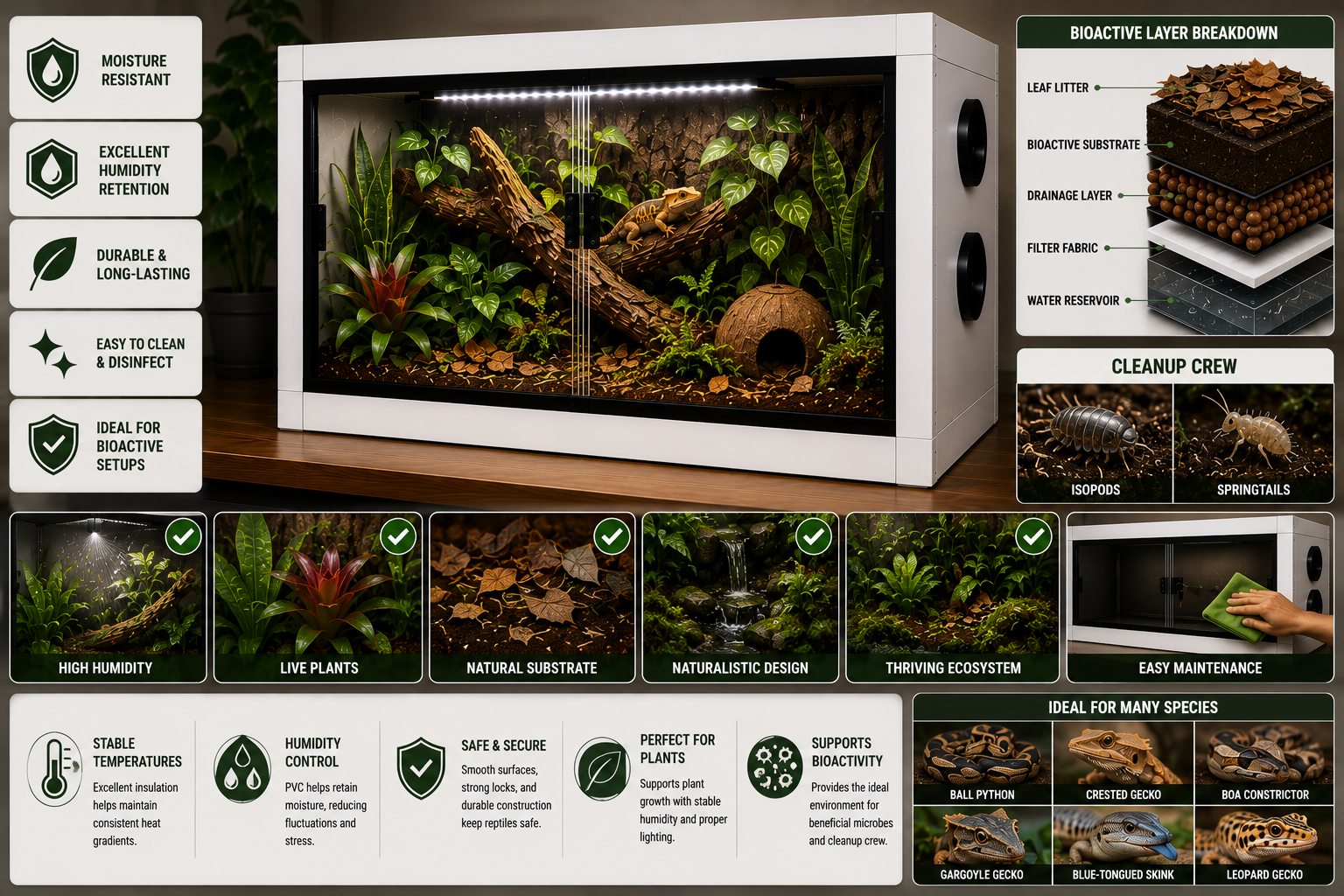
PVC Reptile Enclosures for Bioactive Setups
PVC reptile enclosures are widely considered one of the best options for bioactive setups because they offer excellent humidity retention, moisture resistance, durability, and environmental stability. Unlike wood, PVC won't warp or rot from constant exposure to moisture, making it an ideal foundation for living ecosystems that include plants, beneficial microorganisms, and cleanup crews.
What Is a Bioactive Reptile Setup?
A bioactive enclosure is designed to function more like a natural ecosystem.
It typically includes:
Live plants
Natural substrate layers
Beneficial microorganisms
Cleanup crews such as isopods and springtails
Natural décor
The goal is to create a habitat that more closely resembles the reptile's natural environment.
Why PVC Works So Well for Bioactive Habitats
Moisture Resistance
Bioactive setups often involve:
Frequent misting
Moist substrates
Drainage layers
Live plants
PVC handles these conditions exceptionally well because it does not absorb water.
Unlike some wood enclosures, PVC won't:
Warp
Swell
Rot
Develop moisture damage
Excellent Humidity Retention
Many bioactive habitats require stable humidity.
PVC helps by:
Reducing moisture loss
Supporting consistent humidity levels
Improving environmental stability
This is particularly beneficial for tropical species.
Easy Cleaning and Maintenance
Although bioactive systems reduce the need for deep cleanings, routine maintenance is still required.
PVC's non-porous surface makes it easy to:
Wipe down surfaces
Clean glass doors
Remove debris
Perform periodic maintenance
Reptiles That Thrive in Bioactive PVC Enclosures
Ball Pythons
Ball Python
Many keepers successfully maintain bioactive setups that support proper humidity and enrichment.
Crested Geckos
Crested Gecko
Bioactive habitats can closely mimic their natural tropical environment.
Gargoyle Geckos
Gargoyle Gecko
Often benefit from planted, humidity-controlled habitats.
Boa Constrictors
Boa Constrictor
Can thrive in larger bioactive PVC enclosures when properly designed.
Blue-Tongued Skinks
Blue-Tongued Skink
Some keepers create naturalistic bioactive environments that encourage exploration and enrichment.
Key Components of a Bioactive PVC Enclosure
Drainage Layer
Many bioactive habitats use a drainage layer beneath the substrate.
This helps manage:
Excess water
Root health
Humidity stability
Bioactive Substrate
A quality substrate blend may include:
Organic soil
Coconut fiber
Bark products
Leaf litter
The exact mix depends on the species.
Cleanup Crew
Bioactive systems commonly use:
Isopods
Springtails
These organisms help break down waste and organic matter.
Live Plants
Popular choices include:
Pothos
Snake plants
Philodendrons
Bromeliads
Always verify plant safety for your specific reptile.
Lighting Considerations
Bioactive setups often require additional lighting to support plant growth.
Common options include:
LED Plant Lighting
Provides illumination for live plants.
UVB Lighting
Required or recommended for many reptile species.
Day-Night Scheduling
Timers help maintain consistent light cycles.
PVC enclosures often make fixture installation easy and clean.
Humidity Advantages of PVC
Humidity management is one of the biggest reasons keepers choose PVC.
Benefits include:
Stable environmental conditions
Reduced moisture loss
Less frequent misting
Better support for tropical plants
For many bioactive projects, this is a major advantage over glass.
PVC vs Other Materials for Bioactive Setups
FeaturePVCGlassWoodMoisture ResistanceExcellentExcellentModerateHumidity RetentionExcellentModerateGoodRot ResistanceExcellentExcellentModerateBioactive CompatibilityExcellentGoodModerateLong-Term DurabilityExcellentGoodModerate
PVC consistently ranks among the best enclosure materials for bioactive environments.
Common Bioactive Setup Mistakes
Choosing the Wrong Plants
Always select species compatible with your reptile and environmental conditions.
Skipping a Drainage Layer
Excess moisture can become problematic without proper drainage.
Overwatering
Even tropical setups can suffer from excessive water accumulation.
Ignoring Ventilation
Good airflow remains important in humid environments.
Is a Bioactive PVC Enclosure More Expensive?
Usually, yes.
Costs may include:
Live plants
Drainage materials
Cleanup crews
Specialized lighting
However, many keepers feel the natural appearance and enrichment benefits justify the investment.
Visual Example
PVC enclosures provide a durable, moisture-resistant foundation for creating thriving bioactive ecosystems.
Frequently Asked Questions
Are PVC enclosures good for bioactive setups?
Yes. Many reptile keepers consider PVC one of the best materials for bioactive habitats.
Can PVC handle high humidity?
Absolutely. PVC is highly resistant to moisture and humidity-related damage.
Do bioactive setups require live plants?
Most do, though the exact design can vary.
Can ball pythons live in bioactive PVC enclosures?
Yes. Many keepers successfully maintain bioactive habitats for ball pythons.
Is PVC better than wood for bioactive enclosures?
For most humid bioactive setups, PVC offers significant advantages in moisture resistance and durability.
Conclusion
PVC reptile enclosures and bioactive setups are an excellent combination.
PVC's resistance to moisture, ability to retain humidity, ease of maintenance, and long lifespan make it one of the best enclosure materials for supporting living ecosystems. Whether you're building a tropical gecko habitat, a planted ball python enclosure, or a fully naturalistic reptile display, a quality PVC enclosure provides a reliable foundation for long-term success.
For keepers interested in creating a beautiful, self-sustaining environment, PVC is often one of the smartest choices available.
