
How Long Do PVC Reptile Enclosures Last?
How Long Do PVC Reptile Enclosures Last?
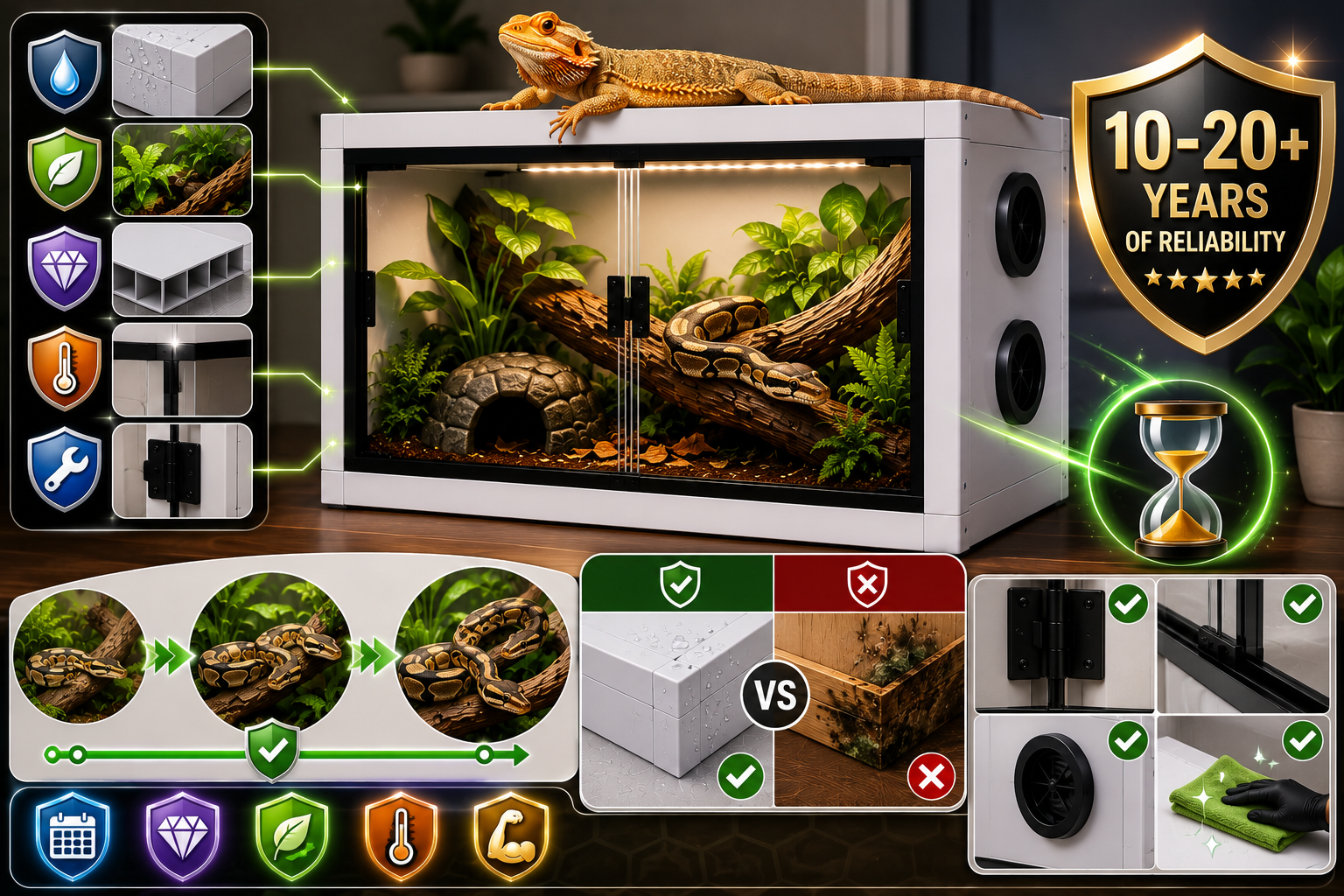
A high-quality PVC reptile enclosure can last 10–20 years or ore with proper care and maintenance. Because PVC is resistant to moisture, warping, rot, and corrosion, it is one of the most durable enclosure materials available for reptile keeping.
Many reptile owners use the same PVC enclosure for multiple reptiles over many years, making it a popular long-term investment.
Why PVC Lasts So Long
PVC is designed to withstand conditions that would damage many other enclosure materials.
It is naturally resistant to:
Humidity
Moisture
Rot
Warping
Corrosion
Odor absorption
This durability makes PVC particularly well-suited for reptile habitats where heat and humidity are often present every day.
Typical PVC Enclosure Lifespan
While actual lifespan varies, a quality enclosure can often provide:
Quality LevelExpected LifespanBudget PVC Enclosure5–10+ YearsMid-Range PVC Enclosure10–15+ YearsPremium PVC Enclosure15–20+ Years or More
In many cases, the enclosure will outlast several generations of equipment such as thermostats, lighting fixtures, and heating elements.
Factors That Affect Longevity
Build Quality
Not all PVC enclosures are made the same.
Higher-quality enclosures often feature:
Thicker PVC panels
Stronger hardware
Better door systems
Improved construction methods
Premium materials generally result in longer service life.
Maintenance
Routine maintenance helps maximize enclosure lifespan.
Good habits include:
Regular cleaning
Inspecting hardware
Keeping door tracks clean
Replacing worn accessories when needed
Humidity Levels
One advantage of PVC is that high humidity typically does not damage the enclosure.
Species such as:
Ball Python
Crested Gecko
Boa Constrictor
can be housed in humid environments without causing the material to deteriorate.
Cleaning Practices
Using reptile-safe cleaning products helps preserve:
Surfaces
Door tracks
Hardware
Visibility through doors
Avoid unnecessarily harsh chemicals that may affect components over time.
What Usually Wears Out First?
In many cases, the PVC itself remains in excellent condition for years.
Instead, the first components that may require replacement include:
Door Tracks
Sliding door systems may experience wear from years of use.
Locks and Hardware
Frequent opening and closing can eventually affect moving parts.
Lighting and Heating Equipment
Fixtures and bulbs often need replacement long before the enclosure structure itself.
Door Seals
Some premium enclosures use seals that may require occasional replacement.
PVC vs Other Enclosure Materials
PVC vs Wood
PVC generally lasts longer in humid environments because it:
Doesn't rot
Doesn't warp
Doesn't absorb moisture
Wood often requires additional maintenance and sealing.
PVC vs Glass
Both materials can last many years, but PVC offers:
Better insulation
Lower risk of breakage
Easier humidity management
Signs a PVC Enclosure Is Still in Good Condition
A well-maintained enclosure should have:
Stable structure
Smooth door operation
Intact hardware
Clean surfaces
No moisture damage
Proper environmental control
Most quality PVC habitats maintain these characteristics for many years.
Why Many Keepers View PVC as a Long-Term Investment
Although PVC enclosures often cost more initially than some alternatives, many owners appreciate:
Long lifespan
Low maintenance
Moisture resistance
Excellent insulation
Flexibility for different species
A single enclosure may house multiple reptiles over its lifetime.
Species Commonly Housed Long-Term in PVC
PVC is frequently used for species such as:
Ball Python
Corn Snake
Bearded Dragon
Blue-Tongued Skink
Leopard Gecko
Boa Constrictor
Many keepers continue using the same enclosure for years with minimal issues.
Tips to Extend the Life of Your PVC Enclosure
Clean Regularly
Routine maintenance prevents buildup and unnecessary wear.
Inspect Hardware Periodically
Tighten or replace worn hardware when needed.
Protect Electrical Components
Keep lighting and heating systems properly installed and maintained.
Avoid Excessive Force
Doors, locks, and tracks last longer when operated carefully.
Visual Example
A well-built PVC enclosure can remain functional and attractive for many years with routine care and maintenance.
Frequently Asked Questions
How long does a PVC reptile enclosure last?
A quality PVC enclosure can often last 10–20 years or more.
Do PVC enclosures wear out?
The PVC itself is very durable, though components such as door tracks, locks, and fixtures may eventually need maintenance or replacement.
Does humidity shorten the lifespan of PVC?
No. PVC is highly resistant to humidity and moisture-related damage.
Are PVC enclosures worth the investment?
Many reptile keepers consider them worthwhile because of their durability, insulation, and low maintenance requirements.
Can a PVC enclosure be reused for different reptiles?
Yes. Many owners use the same enclosure for multiple reptiles over many years.
Conclusion
PVC reptile enclosures are among the most durable reptile habitats available, often lasting well over a decade when properly maintained.
Their resistance to moisture, humidity, warping, and odor absorption makes them an excellent long-term choice for reptile keepers. While some components may require occasional replacement, the enclosure itself can continue performing reliably for many years.
For anyone seeking a durable, low-maintenance habitat, a high-quality PVC enclosure is often one of the smartest long-term investments in reptile keeping.
