
Are PVC Reptile Enclosures Waterproof?
Are PVC Reptile Enclosures Waterproof?
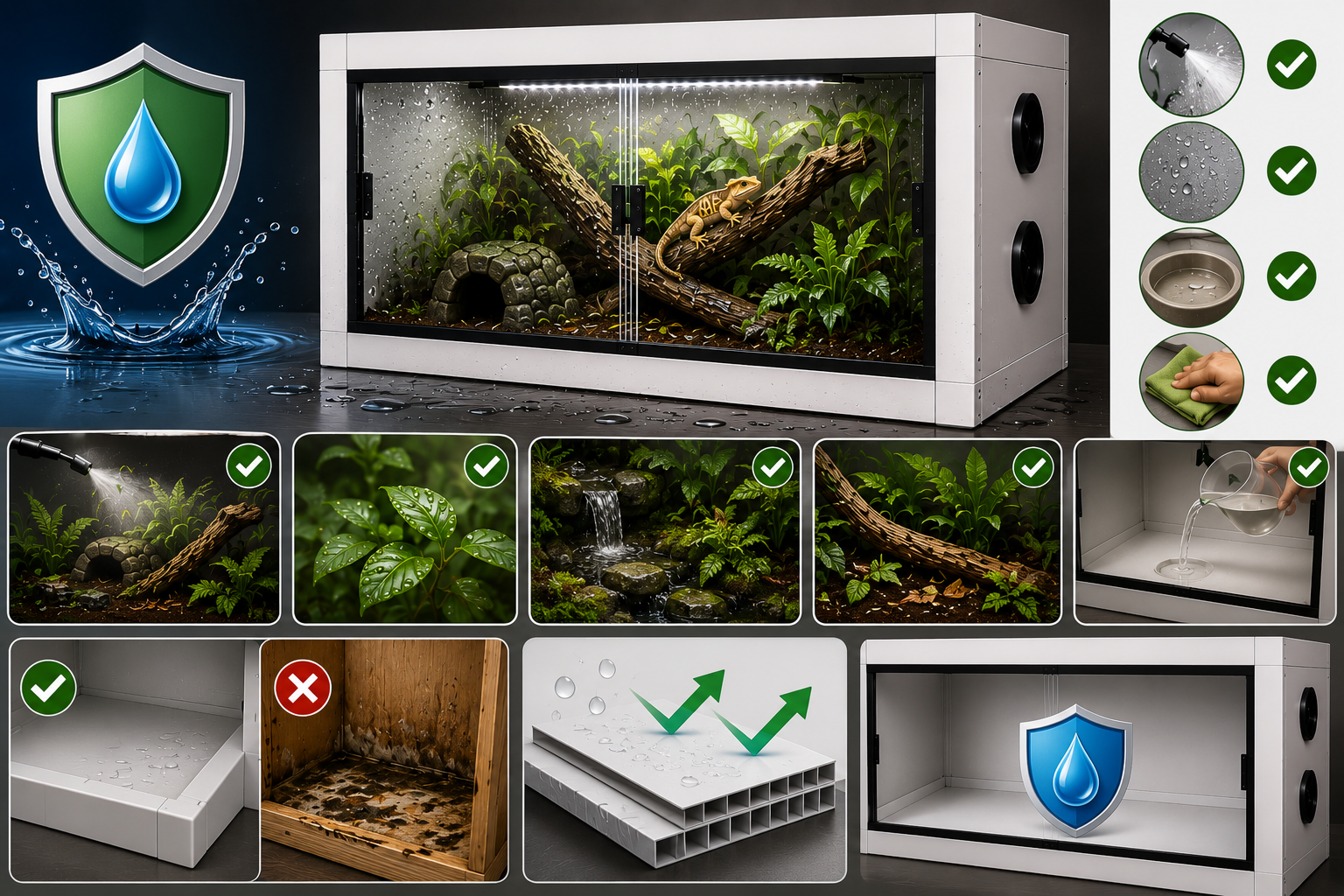
Yes, PVC reptile enclosures are highly water-resistant and are often considered waterproof for normal reptile-keeping purposes. PVC does not absorb moisture, warp, rot, or swell when exposed to humidity, misting, or occasional spills. This makes it one of the most popular enclosure materials for tropical reptiles, bioactive habitats, and high-humidity setups.
However, not every PVC enclosure is designed to hold standing water like an aquarium, so it's important to understand the difference between moisture resistance and water containment.
Why PVC Handles Moisture So Well
PVC (Polyvinyl Chloride) is a non-porous material.
Unlike wood, it does not absorb:
Water
Humidity
Waste
Odors
This makes PVC especially useful in environments where moisture is regularly present.
What "Waterproof" Means for Reptile Enclosures
Most PVC reptile enclosures are designed to handle:
Daily misting
High humidity levels
Water bowl spills
Routine cleaning
Bioactive substrates
Automated misting systems
These conditions typically cause no problems for quality PVC enclosures.
Can PVC Enclosures Hold Standing Water?
Usually, no.
Most standard PVC reptile enclosures are not intended to function as:
Aquariums
Paludariums
Fully aquatic habitats
While the PVC material itself is water-resistant, enclosure seams, vents, and door tracks may not be designed to contain large volumes of water.
Always check manufacturer specifications if you plan to include water features.
Why PVC Is Better Than Wood in Humid Environments
One reason many reptile keepers upgrade from wood is moisture resistance.
Wood Can:
Warp
Swell
Rot
Absorb odors
Require sealing
PVC Typically:
Resists moisture
Maintains its shape
Requires little maintenance
Resists odor absorption
This makes PVC a popular long-term investment.
Ideal for High-Humidity Reptiles
PVC enclosures are often recommended for species that require elevated humidity levels.
Examples include:
Ball Pythons
Ball Python
PVC helps maintain stable humidity for healthy shedding and hydration.
Boa Constrictors
Boa Constrictor
Benefit from humidity retention and environmental stability.
Crested Geckos
Crested Gecko
Often housed in humid environments with regular misting.
Gargoyle Geckos
Gargoyle Gecko
Thrive in habitats where moisture retention is important.
PVC and Bioactive Setups
Bioactive enclosures often contain:
Moist substrates
Live plants
Drainage layers
Frequent misting
PVC works exceptionally well for these systems because it:
Resists moisture damage
Supports stable humidity
Requires minimal maintenance
Many keepers choose PVC specifically for bioactive projects.
PVC and Automated Misting Systems
PVC enclosures are commonly paired with:
Misting systems
Foggers
Humidifiers
Because PVC is moisture-resistant, it handles repeated exposure to humidity much better than many alternative materials.
What to Look for in a Waterproof PVC Enclosure
Quality Construction
Well-built enclosures typically feature:
Tight seams
Proper panel alignment
Secure hardware
Appropriate Door Design
High-quality sliding or hinged doors help minimize moisture escape.
Silicone-Sealed Seams (When Needed)
Some premium enclosures include sealed interior seams for additional moisture protection.
Proper Ventilation
Good airflow helps balance humidity and prevent excessive condensation.
Common Water-Related Mistakes
Overfilling Water Features
Standard reptile enclosures are not designed to hold large bodies of water.
Assuming Every PVC Enclosure Is Aquarium-Safe
Most are not intended for permanent standing water.
Ignoring Ventilation
Excess moisture without airflow can create husbandry challenges.
Allowing Water to Pool Constantly
Even waterproof materials benefit from proper drainage and maintenance.
PVC vs Other Enclosure Materials
FeaturePVCWoodGlassWater ResistanceExcellentModerateExcellentHumidity ResistanceExcellentModerateGoodRot ResistanceExcellentPoorExcellentMoisture AbsorptionNoneModerateNoneBioactive CompatibilityExcellentModerateGood
PVC consistently ranks among the best materials for humid reptile habitats.
Visual Example
PVC enclosures are widely used for humid and tropical habitats because they resist moisture damage while maintaining stable environmental conditions.
Frequently Asked Questions
Are PVC reptile enclosures waterproof?
For normal reptile-keeping applications, yes. They are highly resistant to water, humidity, and moisture.
Can PVC enclosures be used with misting systems?
Yes. PVC works very well with automated misting and humidity systems.
Will PVC warp from humidity?
No. PVC is highly resistant to warping, swelling, and moisture damage.
Can a PVC enclosure hold a large water feature?
Not all can. Check manufacturer specifications before adding significant standing water.
Is PVC better than wood for tropical reptiles?
Many keepers prefer PVC because it handles humidity far better and requires less maintenance.
Conclusion
PVC reptile enclosures are among the most moisture-resistant and humidity-friendly habitats available today.
Their non-porous construction allows them to withstand misting, high humidity, bioactive setups, and routine cleaning without warping, rotting, or absorbing moisture. While most are not designed to function as aquariums, they are exceptionally well-suited for the environmental conditions required by many reptiles.
For keepers of tropical, humidity-loving, or bioactive species, waterproof performance is one of the many reasons PVC continues to be a top enclosure choice.
