
Do PVC Reptile Enclosures Smell?
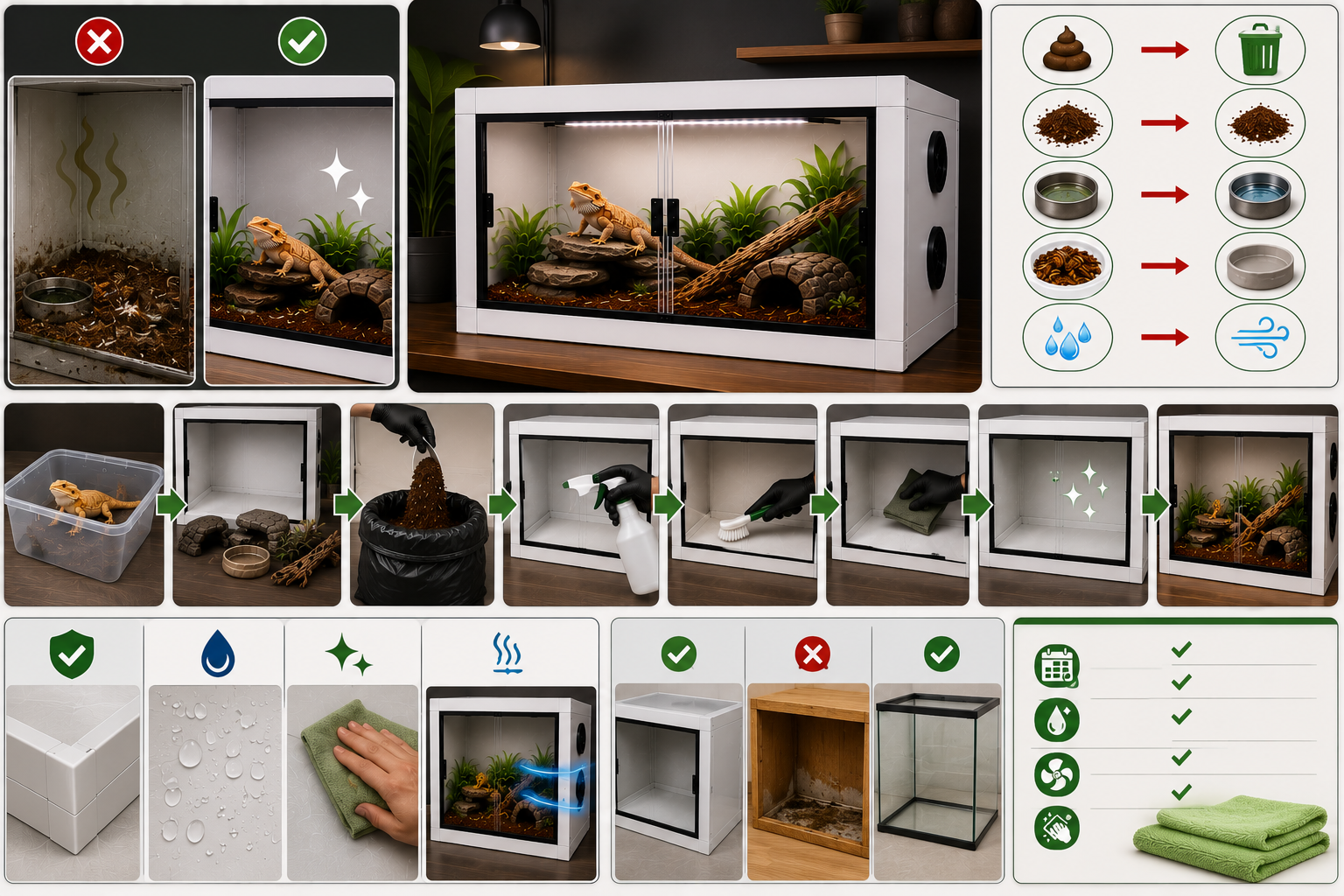
Do PVC Reptile Enclosures Smell?
PVC reptile enclosures themselves do not typically develop odors. PVC is a non-porous material, which means it does not absorb waste, moisture, or smells the way some other materials can. If a PVC enclosure develops an odor, the cause is usually related to husbandry factors such as waste buildup, dirty substrate, stagnant water, or inadequate cleaning—not the PVC itself.
Why PVC Resists Odors
One of PVC's biggest advantages is its smooth, non-porous surface.
Unlike some materials, PVC does not readily absorb:
Moisture
Urates
Feces
Food residue
Organic waste
Because contaminants stay on the surface, they can be removed during routine cleaning rather than soaking into the enclosure.
What Actually Causes Reptile Enclosure Odors?
If you notice a smell coming from your enclosure, the source is usually one of the following:
Waste Accumulation
The most common cause.
Feces and urates left in the enclosure for extended periods can create unpleasant odors.
Dirty Substrate
Substrate can trap:
Waste
Food particles
Moisture
Over time, this can lead to odor buildup.
Water Bowls
Water dishes that are not cleaned regularly may develop:
Bacterial growth
Biofilm
Organic residue
These can contribute to unwanted smells.
Uneaten Food
Leftover prey items, vegetables, or feeder insects can spoil and create odors if not removed promptly.
Excess Moisture
Overly damp conditions combined with poor ventilation can sometimes create musty smells.
Why PVC Performs Better Than Some Alternatives
PVC vs Wood
Wood-based enclosures can sometimes absorb moisture and odors if not properly sealed.
PVC does not have this problem because of its non-porous construction.
PVC vs Glass
Both materials resist odor absorption well, but PVC often offers better humidity management and easier maintenance in many reptile setups.
Species That Can Be Housed Successfully in PVC
PVC enclosures work well for a wide variety of reptiles, including:
Ball Python
Corn Snake
Bearded Dragon
Blue-Tongued Skink
Leopard Gecko
Crested Gecko
With proper husbandry, these enclosures can remain relatively odor-free.
How to Keep a PVC Enclosure Smelling Fresh
Spot Clean Regularly
Remove waste as soon as possible.
Daily spot cleaning is one of the best ways to prevent odors.
Clean Water Dishes Frequently
Fresh water should be provided regularly, and bowls should be cleaned thoroughly.
Replace Substrate as Needed
Different substrates require different maintenance schedules.
Do not allow substrate to become heavily soiled.
Maintain Proper Ventilation
Good airflow helps prevent stale or musty conditions.
Perform Routine Deep Cleaning
Periodic disinfection helps remove residue and maintain hygiene.
What About the "New PVC Smell"?
Some new enclosures may have a mild manufacturing odor when first unpacked.
This is usually temporary and often disappears after:
Airing out the enclosure
Initial cleaning
Normal use
If purchasing from a reputable manufacturer, any odor should fade quickly.
Signs an Odor Indicates a Problem
A strong or persistent smell may suggest:
Waste buildup
Dirty substrate
Poor ventilation
Standing water
Husbandry issues
Investigating the source is important rather than simply masking the odor.
PVC and Bioactive Enclosures
Bioactive setups may develop an earthy smell due to:
Soil
Plants
Natural decomposition processes
This is often normal and different from foul or unpleasant odors.
PVC works very well with bioactive systems because it resists moisture absorption.
PVC vs Other Enclosure Materials
FeaturePVCWoodGlassOdor AbsorptionExcellent ResistanceModerateExcellent ResistanceMoisture ResistanceExcellentModerateExcellentCleaning EaseExcellentModerateExcellentLong-Term Odor ControlExcellentModerateExcellent
Visual Example
A clean, well-maintained PVC enclosure is typically easy to keep fresh and odor-free.
Frequently Asked Questions
Does PVC absorb reptile odors?
No. PVC is non-porous and generally does not absorb odors.
Why does my reptile enclosure smell?
Common causes include waste buildup, dirty substrate, spoiled food, stagnant water, or inadequate cleaning.
Are PVC enclosures better than wood for odor control?
Yes. PVC generally resists odor absorption much better than untreated or poorly sealed wood.
Can bioactive PVC enclosures smell?
They may have a natural earthy scent, but they should not have strong foul odors when properly maintained.
How often should I clean a PVC enclosure?
Spot cleaning should occur as needed, while deeper cleaning schedules depend on the species and enclosure setup.
Conclusion
PVC reptile enclosures themselves do not typically smell because PVC is highly resistant to moisture, waste absorption, and odor retention.
If an odor develops, it is usually caused by enclosure maintenance issues rather than the material itself. With proper cleaning, substrate management, ventilation, and husbandry practices, a PVC enclosure can remain clean, hygienic, and virtually odor-free for years.
For reptile keepers seeking a durable and low-maintenance habitat, odor resistance is yet another reason PVC has become such a popular enclosure material.
