
Best Heating Setup for a PVC Reptile Enclosure
Best Heating Setup for a PVC Reptile Enclosure
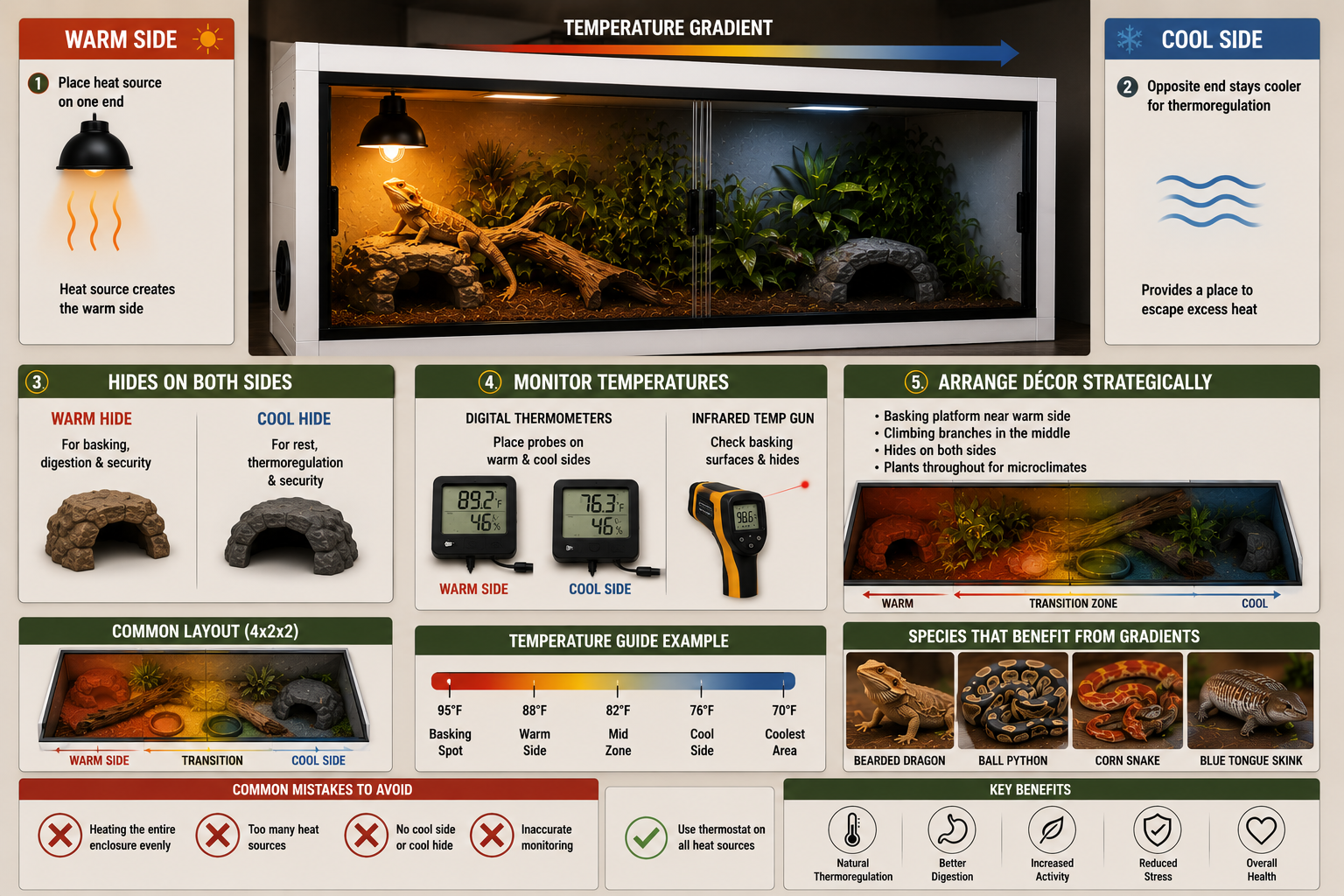
The best heating setup for a PVC reptile enclosure typically combines a primary heat source, a reliable thermostat, and accurate temperature monitoring equipment. The exact setup depends on the species, but most reptiles benefit from a system that creates a warm side, a cool side, and a stable temperature gradient throughout the enclosure.
Because PVC retains heat so efficiently, it often requires less energy to maintain proper temperatures than a comparable glass enclosure.
Why Proper Heating Matters
Reptiles rely on external heat to regulate their body temperature.
Proper temperatures support:
Digestion
Immune function
Activity levels
Appetite
Healthy metabolism
Without a suitable heating setup, even the best enclosure will not provide a healthy environment.
Why PVC Enclosures Work So Well With Heating Systems
PVC offers several advantages:
Better Heat Retention
PVC naturally insulates better than glass.
Benefits include:
Reduced heat loss
More stable temperatures
Improved energy efficiency
More Consistent Temperature Gradients
Because PVC holds heat effectively, it's easier to create:
Warm basking zones
Comfortable ambient temperatures
Cooler retreat areas
Lower Heating Costs
Many keepers find their heating equipment runs less frequently compared to glass setups.
The Most Popular Heating Options
1. Radiant Heat Panels (RHP)
Radiant heat panels are one of the most popular choices for PVC enclosures.
Benefits
Even heat distribution
No visible light
Energy efficient
Ideal for snakes and many tropical reptiles
Commonly used for:
Ball Python
Boa Constrictor
Corn Snake
2. Halogen Basking Bulbs
Many reptile keepers consider halogen bulbs one of the best daytime heat sources.
Benefits
Natural basking heat
Strong heat projection
Supports natural behaviors
Popular for:
Bearded Dragon
Blue-Tongued Skink
3. Ceramic Heat Emitters (CHE)
Ceramic heat emitters provide heat without visible light.
Benefits
Useful for nighttime heating
Long lifespan
Effective supplemental heat
Often used alongside other heat sources.
4. Deep Heat Projectors (DHP)
Deep heat projectors have become increasingly popular.
Benefits
Produce infrared heat
No visible light
Effective day or night use
Suitable for many reptile species.
The Most Important Piece: A Thermostat
No heating setup is complete without a thermostat.
A thermostat helps:
Prevent overheating
Maintain stable temperatures
Improve safety
Protect your reptile
Every primary heat source should be thermostat-controlled.
Creating a Proper Temperature Gradient
A healthy enclosure should provide:
AreaPurposeWarm SideBasking and digestionMiddle ZoneTransitional temperaturesCool SideThermoregulation and rest
This allows reptiles to move freely and regulate their body temperature naturally.
Recommended Heating by Species
Ball Pythons
Ball Python
Common setup:
Radiant heat panel
Thermostat
Digital temperature monitoring
Bearded Dragons
Bearded Dragon
Common setup:
Halogen basking bulb
UVB lighting
Thermostat-controlled heat source
Blue Tongue Skinks
Blue-Tongued Skink
Common setup:
Halogen basking light
UVB fixture
Thermostat
Corn Snakes
Corn Snake
Common setup:
Radiant heat panel
Deep heat projector
Thermostat
Monitoring Temperatures Correctly
Use:
Digital Thermometers
Place probes at:
Warm side
Cool side
Infrared Temperature Gun
Useful for checking:
Basking surfaces
Branches
Hides
Thermostat Probe Placement
Always follow manufacturer recommendations for accurate control.
Common Heating Mistakes
No Thermostat
This is one of the most dangerous mistakes.
Heating the Entire Enclosure Equally
Reptiles need temperature choices.
Using Inadequate Monitoring Equipment
Accurate readings are essential.
Choosing Heat Sources Based Only on Price
Reliability and suitability matter more than cost.
Example PVC Heating Setup
A properly heated PVC enclosure should provide a stable thermal gradient, safe basking opportunities, and consistent temperatures throughout the habitat.
Frequently Asked Questions
What is the best heat source for a PVC enclosure?
It depends on the species. Radiant heat panels, halogen bulbs, deep heat projectors, and ceramic heat emitters are all popular options.
Do PVC enclosures need less heating than glass tanks?
Often, yes. PVC retains heat more effectively, reducing heat loss.
Can I use a heat mat with a PVC enclosure?
Some keepers do, but overhead heating systems are generally preferred for many species because they create more natural temperature gradients.
Do I need a thermostat?
Yes. Every primary heat source should be regulated by a thermostat.
Are radiant heat panels worth it?
Many keepers consider them one of the best heating options for snakes and tropical reptiles housed in PVC enclosures.
Conclusion
The best heating setup for a PVC reptile enclosure combines an appropriate heat source, a quality thermostat, and accurate monitoring equipment.
Because PVC retains heat so efficiently, it provides an excellent foundation for creating stable thermal gradients that support healthy reptile behavior and long-term well-being.
Whether you're housing a ball python, bearded dragon, corn snake, or another species, choosing the right heating system is one of the most important steps in building a successful enclosure.
