
Do PVC Reptile Enclosures Hold Heat Better Than Glass?
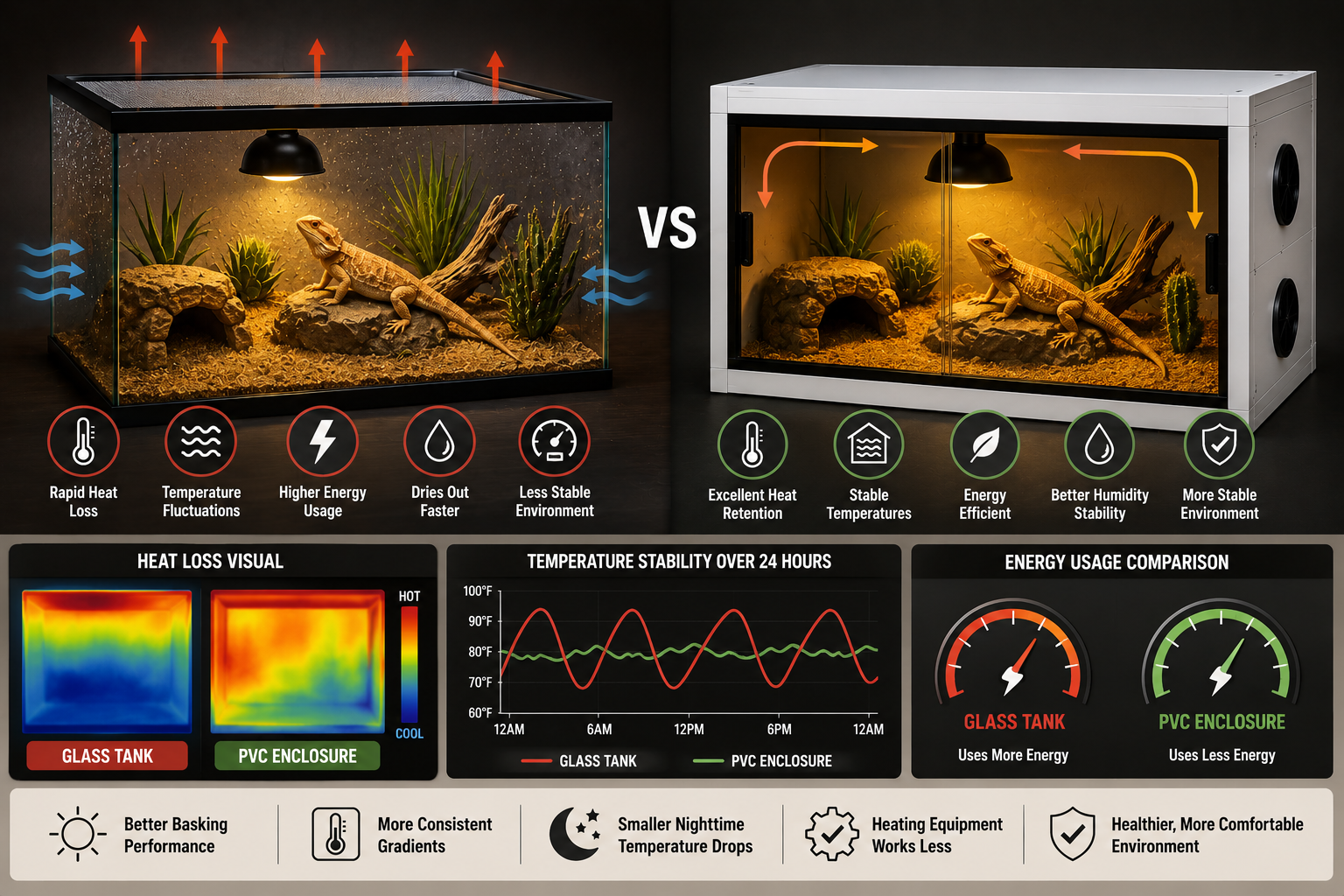
Do PVC Reptile Enclosures Hold Heat Better Than Glass?
Yes, PVC reptile enclosures generally hold heat much better than glass tanks. PVC is a naturally insulating material that slows heat loss, helping maintain more stable temperatures throughout the enclosure. This can make heating more efficient, reduce temperature fluctuations, and create a more comfortable environment for many reptiles.
Why Heat Retention Matters
Reptiles depend on external heat sources to regulate their body temperature.
Proper temperatures support:
Digestion
Immune function
Activity levels
Appetite
Overall health
When an enclosure loses heat too quickly, it becomes harder to maintain the stable conditions reptiles need.
Why Glass Loses Heat Quickly
Glass is not a good insulator.
In fact, it transfers heat relatively easily.
This means:
Warm air escapes faster
Temperatures fluctuate more easily
Heating equipment works harder
Energy consumption may increase
Many glass tanks also include large screen tops, which allow even more heat to escape.
Why PVC Holds Heat Better
1. PVC Is Naturally Insulating
Unlike glass, PVC slows the transfer of heat.
Benefits include:
More stable temperatures
Less heat loss
Improved energy efficiency
Easier temperature management
This is one reason PVC has become so popular among reptile keepers.
2. Reduced Heat Loss Through the Walls
PVC panels help contain warmth inside the enclosure.
As a result:
Basking areas stay warmer longer
Ambient temperatures remain more consistent
Nighttime temperature drops are often less dramatic
3. Better Performance in Cooler Homes
If your home uses:
Air conditioning
Ceiling fans
Central heating
PVC often performs noticeably better because outside room temperatures have less impact on the enclosure.
Which Reptiles Benefit Most From Better Heat Retention?
Many reptiles thrive when temperatures remain stable.
Examples include:
Ball Pythons
Ball Python
Require consistent warm and cool zones for proper thermoregulation.
Boa Constrictors
Boa Constrictor
Benefit from stable ambient temperatures and reliable basking areas.
Bearded Dragons
Bearded Dragon
Need strong basking temperatures and effective thermal gradients.
Blue Tongue Skinks
Blue-Tongued Skink
Benefit from predictable temperatures throughout the enclosure.
Corn Snakes
Corn Snake
Often thrive in stable, easily maintained thermal gradients.
Heat Retention and Humidity Go Hand in Hand
One often-overlooked benefit of better heat retention is improved humidity stability.
Because PVC retains heat more effectively:
Moisture evaporates more predictably
Humidity fluctuates less
Environmental conditions remain more stable
This is especially useful for tropical species.
Does Better Heat Retention Mean PVC Gets Too Hot?
No.
PVC doesn't create heat on its own.
It simply helps retain the heat generated by your equipment.
Proper husbandry still requires:
Thermostats
Temperature monitoring
Appropriate heating devices
A well-designed PVC enclosure should always be regulated safely.
PVC vs Glass: Heat Retention Comparison
FeaturePVC EnclosureGlass TankHeat RetentionExcellentModerateInsulationExcellentLowTemperature StabilityExcellentModerateEnergy EfficiencyExcellentModerateHeat Loss Through WallsLowHigherHumidity StabilityExcellentModerate
For most reptiles, PVC provides a more stable environment.
Signs Your Glass Tank Is Losing Too Much Heat
You may notice:
Large temperature swings
Heating equipment running constantly
Cool spots becoming too cold
Difficulty maintaining basking temperatures
Higher electricity usage
These issues often improve after upgrading to PVC.
Common Mistakes to Avoid
Assuming PVC Eliminates the Need for Monitoring
Even with better insulation, temperatures should always be monitored.
Using Inadequate Heating Equipment
PVC improves efficiency but still requires appropriate heat sources.
Ignoring Ventilation
Proper airflow remains important for healthy enclosure conditions.
Choosing an Enclosure That's Too Small
Temperature gradients are easier to create in appropriately sized habitats.
Visual Example
PVC enclosures help maintain stable temperatures by reducing heat loss and improving overall environmental consistency.
Frequently Asked Questions
Do PVC enclosures hold heat better than glass?
Yes. PVC is a much better insulator and typically retains heat more effectively.
Does PVC reduce heating costs?
Many keepers report lower heating demands because PVC reduces heat loss.
Are PVC enclosures good for tropical reptiles?
Yes. Better heat retention often helps support both temperature and humidity stability.
Can PVC enclosures overheat?
Any enclosure can overheat if heating equipment is improperly regulated. Thermostats should always be used.
Why do breeders prefer PVC enclosures?
Many breeders appreciate the improved temperature stability, humidity retention, durability, and energy efficiency.
Conclusion
When it comes to heat retention, PVC reptile enclosures have a clear advantage over traditional glass tanks.
Their insulating properties help maintain stable temperatures, reduce heat loss, improve energy efficiency, and create a more consistent environment for reptiles. Whether you're keeping a ball python, bearded dragon, boa, or another species that relies on carefully controlled temperatures, a PVC enclosure can make husbandry easier and more reliable.
For many reptile keepers, better heat retention is one of the biggest reasons they choose PVC over glass.
