
Best Wood Boards for Closet Shelving Projects
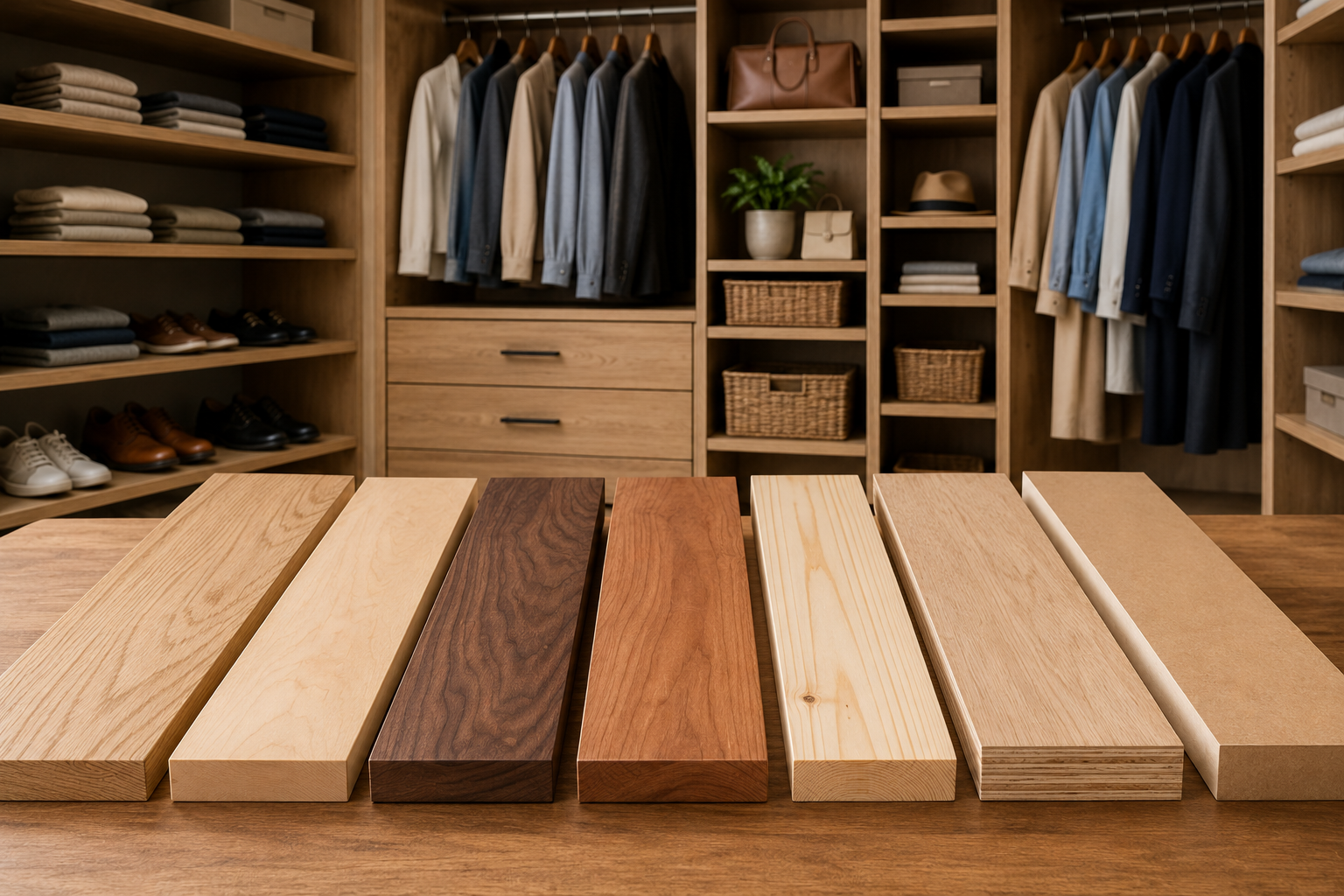
Best Wood Boards for Closet Shelving Projects
The best wood boards for closet shelving depend on your budget, storage needs, and design preferences. White oak and maple are excellent choices for heavy-duty shelves, while cabinet-grade plywood offers outstanding stability and value. Pine is a budget-friendly option for light to medium storage, and walnut provides a premium appearance for luxury walk-in closets.
Why Choosing the Right Wood Matters
Closet shelves do much more than hold clothes.
Depending on your needs, they may support:
Folded clothing
Shoes
Storage bins
Handbags
Towels
Books
Decorative baskets
Seasonal storage
Using the wrong material can lead to sagging shelves, warping, or premature wear. Selecting the right wood from the beginning ensures your shelving system remains sturdy and attractive for years.
What Makes a Good Closet Shelf?
Before choosing a wood species, consider the characteristics that contribute to durable shelving.
The ideal material should provide:
Excellent strength
Resistance to sagging
Dimensional stability
Smooth finishing surface
Attractive grain
Easy maintenance
Long service life
If your shelves will span long distances or support heavy items, strength should be your top priority.
White Oak: The Best Overall Choice
White oak consistently ranks among the best woods for closet shelving.
Advantages
Exceptional strength
Beautiful natural grain
Highly durable
Resistant to everyday wear
Excellent stain absorption
Suitable for both modern and traditional interiors
White oak combines performance with timeless style, making it an excellent investment for custom closets.
Best For
Walk-in closets
Luxury closet systems
Heavy-duty shelving
Built-in storage
Maple: Built for Heavy Loads
Maple is one of the hardest domestic hardwoods and performs exceptionally well under weight.
Benefits
High load capacity
Smooth, clean appearance
Resistant to dents
Long-lasting durability
Works well with clear or painted finishes
Maple is ideal for shelves storing heavy clothing, storage boxes, or large collections of shoes.
Walnut: Premium Appearance
Walnut is often selected for high-end custom closets.
Pros
Rich chocolate-brown color
Elegant grain patterns
Premium finish
Excellent stability
Adds value to custom interiors
Although more expensive than many hardwoods, walnut creates a sophisticated, furniture-quality appearance.
Cherry: Warm and Elegant
Cherry wood develops a deeper, richer tone over time.
Its advantages include:
Smooth grain
Classic appearance
Natural warmth
Easy finishing
Excellent for luxury cabinetry
Cherry is particularly popular in traditional and transitional home designs.
Pine: Affordable and Easy to Work With
Pine remains one of the most popular choices for DIY closet shelving.
Advantages
Budget-friendly
Lightweight
Easy to cut and install
Readily available
Accepts paint well
Considerations
Because pine is softer than hardwoods, it may dent or sag more easily if used for long shelves carrying heavy loads.
It's best suited for:
Linen closets
Children's closets
Light-duty storage
Budget renovations
Cabinet-Grade Plywood: Excellent Value
High-quality plywood is one of the most practical materials for built-in shelving.
Benefits
Excellent dimensional stability
Less likely to warp
Strong construction
Cost-effective
Available in large sheets
Ideal for painted shelving
Many professional closet systems use cabinet-grade plywood because it combines strength with affordability.
MDF: Best for Painted Closets
Medium-density fiberboard (MDF) offers a smooth, consistent surface.
Advantages include:
Perfect for paint
Smooth finish
Affordable
Uniform appearance
However, MDF is heavier than solid wood and is more susceptible to moisture damage, making it less suitable for damp environments.
Comparing Popular Shelf Materials
MaterialStrengthAppearanceCostBest ForWhite OakExcellentPremium grainMedium-HighLuxury closetsMapleExcellentSmooth and cleanMediumHeavy-duty shelvesWalnutExcellentRich dark colorHighDesigner closetsCherryVery GoodWarm natural tonesHighTraditional interiorsPineModerateRustic appearanceLowBudget DIY projectsCabinet-Grade PlywoodVery GoodVeneered finishMediumBuilt-in systemsMDFModerateSmooth painted finishLowPainted shelving
Choosing the Right Shelf Thickness
Shelf thickness affects both appearance and performance.
Common options include:
¾-Inch Shelves
Suitable for:
Short shelf spans
Folded clothing
Towels
Decorative storage
1-Inch Shelves
Offer increased rigidity and a more substantial appearance.
1½-Inch Shelves
Recommended for:
Long shelf spans
Heavy storage
Premium custom closets
Thicker shelves are less likely to sag over time, especially when supporting substantial weight.
Should You Order Custom-Cut Boards?
Custom-cut lumber can simplify your project considerably.
Benefits include:
Exact dimensions
Faster installation
Reduced waste
Cleaner finished appearance
Less cutting at home
Better overall accuracy
If you're building a custom closet, ordering boards cut to your specifications can save hours of preparation.
Finishing Your Closet Shelves
A protective finish enhances both appearance and durability.
Popular choices include:
Clear polyurethane
Water-based polyurethane
Hardwax oil
Satin lacquer
Painted finish
Natural penetrating oil
For closets, satin and matte finishes are especially popular because they resist fingerprints while maintaining a clean appearance.
Tips for Building Long-Lasting Closet Shelves
To maximize durability:
Use kiln-dried lumber.
Install sturdy shelf supports.
Anchor shelving into wall studs whenever possible.
Avoid excessive shelf spans without support.
Sand all exposed edges.
Apply a durable protective finish.
Proper installation is just as important as selecting the right material.
Common Mistakes to Avoid
Using Shelves That Are Too Thin
Thin boards can sag under the weight of clothing or storage containers.
Ignoring Shelf Span
Long shelves require thicker material or additional support brackets.
Choosing Wood Based Only on Price
Cheaper materials may save money initially but often require replacement sooner.
Forgetting About Moisture
If the closet is located near a bathroom or laundry room, choose moisture-resistant materials and finishes.
Frequently Asked Questions
What is the strongest wood for closet shelves?
White oak and maple are among the strongest options for residential closet shelving because they resist sagging and wear exceptionally well.
Is plywood better than solid wood?
Cabinet-grade plywood offers excellent stability and value, while solid hardwood provides superior appearance and can be refinished multiple times.
Can I use pine for closet shelves?
Yes. Pine is an excellent budget-friendly option for light to medium storage, though it may require additional supports for longer shelf spans.
Should I buy lumber already cut to size?
Yes. Ordering custom-cut boards reduces installation time, improves accuracy, and minimizes material waste.
Conclusion
The best wood boards for closet shelving combine strength, durability, and style. White oak is the best all-around choice for premium closets, offering outstanding performance and timeless beauty. Maple provides exceptional strength for heavy storage, walnut delivers a luxurious appearance, and cabinet-grade plywood remains one of the most practical options for built-in shelving systems.
Whether you're upgrading a reach-in closet or designing a custom walk-in wardrobe, selecting quality materials and ordering boards cut to your exact dimensions will help you achieve a professional-looking result that stands up to daily use for years to come.
