
Common Lumber Sizes Explained (And When You Need Custom Cuts)
Common Lumber Sizes Explained (And When You Need Custom Cuts)
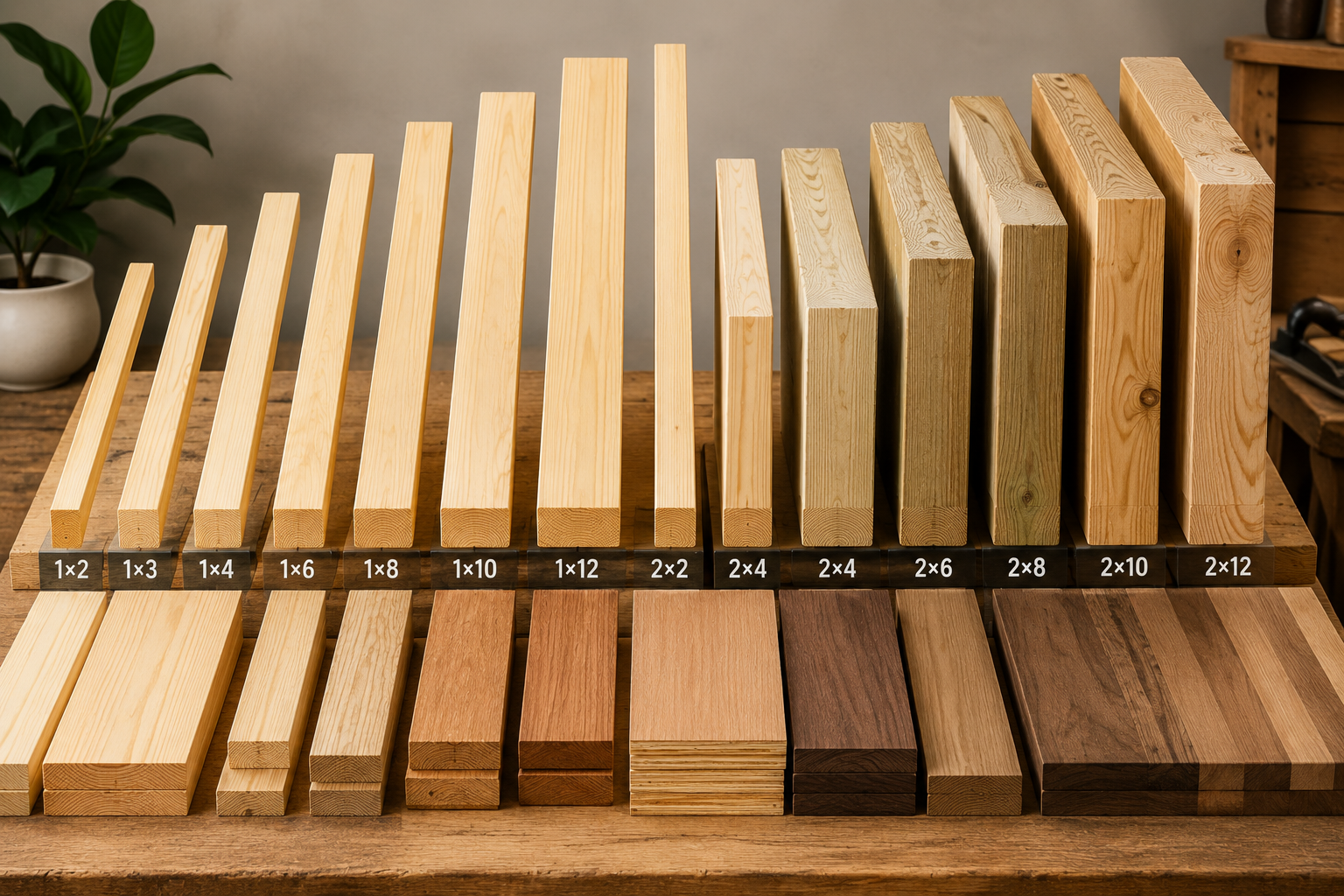
Lumber is typically sold using nominal sizes, such as 1×4 or 2×6, but the actual finished dimensions are smaller because the wood is planed and dried during manufacturing. Understanding these standard sizes helps you plan accurately, while custom-cut lumber is the better option when your project requires precise dimensions, premium hardwood, or a perfect fit.
Why Lumber Sizes Can Be Confusing
If you've ever purchased lumber for a DIY project, you've probably noticed that a board labeled as 1×6 doesn't actually measure 1 inch by 6 inches.
This often surprises first-time woodworkers and homeowners.
The reason is simple: lumber is labeled using nominal dimensions, which describe the board before it's dried and finished. During the milling process, wood is planed smooth and loses a small amount of thickness and width.
Knowing the difference between nominal and actual dimensions is essential for building furniture, shelving, cabinetry, accent walls, and custom barn doors.
Nominal Size vs Actual Size
Nominal size refers to the name of the board.
Actual size refers to its finished dimensions after milling.
Here are some of the most common examples.
Nominal SizeActual Size1 × 2¾ × 1½ inches1 × 3¾ × 2½ inches1 × 4¾ × 3½ inches1 × 6¾ × 5½ inches1 × 8¾ × 7¼ inches1 × 10¾ × 9¼ inches1 × 12¾ × 11¼ inches2 × 21½ × 1½ inches2 × 41½ × 3½ inches2 × 61½ × 5½ inches2 × 81½ × 7¼ inches2 × 101½ × 9¼ inches2 × 121½ × 11¼ inches
Always use the actual dimensions when designing your project or calculating material requirements.
The Most Common Lumber Sizes and Their Uses
1×2 Boards
These narrow boards are ideal for:
Decorative trim
Picture frames
Wall molding
Small craft projects
1×4 Boards
A versatile choice commonly used for:
Floating shelves
Decorative wall treatments
Cabinet face frames
Small furniture
1×6 Boards
Popular for:
Farmhouse shelving
Wall paneling
Bench tops
Rustic furniture
Their wider surface makes them useful for projects requiring fewer joints.
1×8 and 1×10 Boards
These boards work well for:
Wide shelving
Bookcases
Console tables
Window benches
They provide greater surface area while maintaining a clean appearance.
2×4 Lumber
Perhaps the most recognized lumber size, 2×4 boards are widely used for:
Wall framing
Workbenches
Outdoor structures
Heavy-duty DIY projects
2×6 and Larger
These thicker boards are commonly chosen for:
Structural framing
Large furniture
Table bases
Heavy shelving
Load-bearing applications
Choosing the Right Thickness
Thickness affects both strength and appearance.
For example:
¾-inch boards are common for shelves, cabinets, and furniture.
1½-inch boards provide additional strength for workbenches and structural projects.
2-inch hardwood slabs are often selected for dining tables, countertops, and premium floating shelves.
Selecting the proper thickness helps ensure the finished project is both attractive and structurally sound.
Hardwood vs Construction Lumber
The type of lumber you choose matters just as much as its size.
Hardwood
Common species include:
White Oak
Walnut
Maple
Cherry
Ash
Hardwood is often used for:
Furniture
Cabinetry
Floating shelves
Custom barn doors
Decorative woodwork
Construction Lumber
Common options include:
Pine
Spruce
Fir
These are frequently used for:
Framing
Outdoor projects
Workshop storage
General home improvement
Choose the material that best suits your project's purpose and desired finish.
When Standard Lumber Sizes Work Best
Standard boards are ideal when:
You're building from published plans.
Your project uses conventional dimensions.
Budget is a priority.
Materials need to be available immediately.
Minor trimming can be done at home.
For many DIY projects, standard lumber provides an excellent balance of affordability and convenience.
When You Need Custom Cuts
Standard boards don't always fit every project.
Custom-cut lumber is often the better choice when:
You need exact dimensions.
You're working with premium hardwood.
Your project includes multiple unique pieces.
You want to reduce waste.
You have limited woodworking tools.
Precision is important.
Ordering boards cut to size can simplify the building process while improving the quality of the finished result.
Projects That Benefit from Custom-Cut Lumber
Custom cuts are especially valuable for:
Floating shelves
Built-in bookcases
Dining tables
Kitchen islands
Cabinet doors
Fireplace mantels
Accent walls
Window seats
Custom barn doors
Receiving lumber that's already cut to your measurements can save significant time during assembly.
Tips for Buying Lumber
Before purchasing, remember to:
Measure your project carefully.
Design using actual board dimensions.
Inspect boards for straightness.
Choose kiln-dried lumber for indoor use.
Purchase a little extra material for waste.
Label each board if ordering custom cuts.
Good planning helps avoid delays and unnecessary expenses.
Common Mistakes to Avoid
Designing with Nominal Dimensions
Always base your plans on the lumber's actual finished size.
Buying Without a Cut List
A complete cut list helps you purchase the correct amount of material and minimizes waste.
Choosing Thickness Based Only on Price
A thinner board may not provide enough strength for heavy-duty applications.
Ignoring Wood Species
The appearance, hardness, and durability of wood vary considerably from one species to another.
Choose a material that's appropriate for both your design and intended use.
Frequently Asked Questions
Why isn't a 2×4 actually 2 inches by 4 inches?
The dimensions refer to the board before it's dried and planed. After processing, the finished size is approximately 1½ × 3½ inches.
Can I buy lumber already cut to size?
Yes. Many lumber suppliers and woodworking retailers offer custom cutting services, allowing you to order boards in the exact dimensions required for your project.
When should I choose custom-cut lumber?
Custom cuts are ideal for projects requiring precision, premium hardwood, or multiple pieces in different sizes.
Should I design using nominal or actual dimensions?
Always use the actual finished dimensions when planning, measuring, and building.
Conclusion
Understanding common lumber sizes is one of the most valuable skills for any DIY enthusiast or woodworker. Knowing the difference between nominal and actual dimensions helps you avoid costly mistakes, purchase the right materials, and build projects that fit together correctly.
While standard lumber sizes work well for many home improvement projects, custom-cut lumber offers greater precision, reduced waste, and a professional finish when exact measurements matter. Whether you're building floating shelves, furniture, cabinetry, or a handcrafted custom barn door, choosing the right lumber size is the first step toward a successful project.
