
How to Balance Ventilation and Humidity in a PVC Enclosure
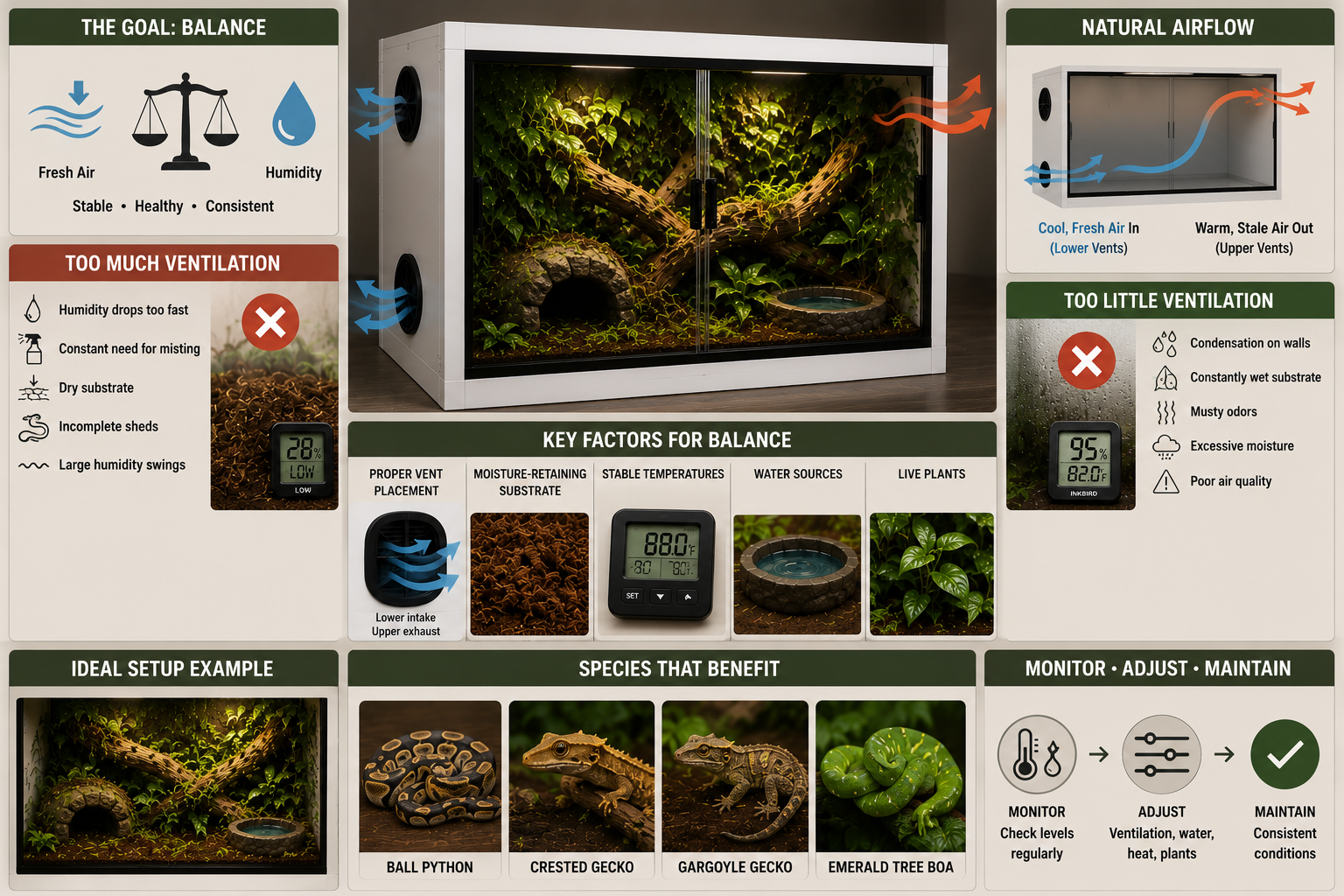
How to Balance Ventilation and Humidity in a PVC Enclosure
The key to balancing ventilation and humidity in a PVC reptile enclosure is providing enough airflow to prevent stagnant air while retaining enough moisture to meet your reptile's humidity needs. This is achieved through proper vent placement, moisture-retaining substrates, temperature control, and regular monitoring.
A well-designed PVC enclosure makes this balance much easier than many traditional glass tanks.
Why Both Ventilation and Humidity Matter
Many reptile keepers focus heavily on humidity but forget that ventilation is equally important.
Proper ventilation helps:
Maintain fresh air
Reduce stagnant conditions
Prevent excessive moisture buildup
Support overall enclosure health
At the same time, humidity is essential for:
Healthy shedding
Hydration
Respiratory health
Natural behavior
The goal is balance—not maximizing one while ignoring the other.
Why PVC Enclosures Make Balancing Easier
PVC enclosures naturally offer:
Better insulation
Reduced moisture loss
Controlled ventilation systems
More stable environmental conditions
Unlike many glass tanks with large screen tops, PVC allows keepers to fine-tune airflow without losing humidity too quickly.
Signs of Too Much Ventilation
When airflow is excessive, you may notice:
Rapid humidity loss
Constant need for misting
Dry substrate
Incomplete sheds
Large humidity fluctuations
Species such as:
Ball Python
Crested Gecko
often show the effects of low humidity first.
Signs of Too Little Ventilation
Insufficient airflow can create different problems.
Possible signs include:
Condensation on walls
Constantly wet substrate
Musty odors
Excessive moisture buildup
Poor air quality
Humidity-loving reptiles still require fresh air circulation.
1. Start With Proper Vent Placement
Vent location matters just as much as vent size.
A common setup uses:
Lower Vent
Allows fresh air to enter.
Upper Vent
Allows warmer air to exit.
This creates natural airflow through the enclosure.
Proper vent placement often provides better results than simply adding more vents.
2. Use Moisture-Retaining Substrate
Substrate plays a major role in humidity stability.
Popular choices include:
Coconut husk
Cypress mulch
Bioactive soil blends
These materials help maintain moisture without making the enclosure excessively wet.
3. Maintain Stable Temperatures
Humidity and temperature are closely connected.
Stable temperatures help create:
Consistent evaporation rates
Predictable humidity levels
Reduced environmental fluctuations
Use:
Thermostats
Digital thermometers
Appropriate heating equipment
4. Adjust Water Sources Strategically
Water dishes contribute to humidity through evaporation.
To increase humidity:
Use larger water bowls
Place water closer to warmer areas
To reduce excess humidity:
Move water away from heat sources
Use smaller bowls if appropriate
5. Consider Live Plants
Bioactive setups often benefit from:
Tropical plants
Mosses
Natural ground cover
Plants can help stabilize humidity while supporting a healthy enclosure ecosystem.
6. Monitor Conditions Accurately
Guessing rarely works.
Use:
Digital Hygrometers
Track humidity levels.
Digital Thermometers
Monitor temperature gradients.
Thermostats
Maintain stable heating conditions.
Monitoring allows you to make small adjustments before major problems develop.
Species That Often Require Careful Balance
Ball Pythons
Ball Python
Need moderate-to-high humidity with good airflow.
Boa Constrictors
Boa Constrictor
Benefit from stable humidity and fresh air circulation.
Crested Geckos
Crested Gecko
Require humidity cycles combined with adequate ventilation.
Gargoyle Geckos
Gargoyle Gecko
Need similar environmental balance for healthy hydration and shedding.
Common Mistakes to Avoid
Covering All Ventilation
Trapping humidity completely can lead to poor air quality.
Chasing Humidity With Constant Misting
Frequent misting often creates temporary spikes rather than long-term stability.
Ignoring Substrate Moisture
The substrate is one of the biggest contributors to humidity regulation.
Using Inaccurate Gauges
Digital monitoring equipment is generally much more reliable than basic analog gauges.
Ventilation vs Humidity: Finding the Sweet Spot
ConditionResultToo Much VentilationLow humidity, dry enclosureToo Little VentilationStale air, excessive moistureBalanced VentilationStable humidity and healthy airflow
The goal is consistency rather than extreme humidity levels.
Visual Example
A properly designed PVC enclosure uses controlled airflow and moisture retention to create a healthy, stable environment.
Frequently Asked Questions
Can a PVC enclosure have too much humidity?
Yes. Excessive humidity combined with poor airflow can create unhealthy conditions.
How much ventilation does a PVC enclosure need?
The exact amount depends on the species, enclosure size, and humidity requirements.
Should I cover enclosure vents to increase humidity?
Partially adjusting ventilation may help, but completely blocking airflow is generally not recommended.
Do bioactive setups help stabilize humidity?
Yes. Many bioactive systems naturally support more consistent humidity levels.
Why does my humidity drop so quickly?
Common causes include excessive ventilation, dry substrate, small water dishes, or temperature fluctuations.
Conclusion
Balancing ventilation and humidity is one of the most important aspects of reptile husbandry, especially for tropical and humidity-dependent species.
Fortunately, PVC enclosures make this process easier by providing better insulation, reduced moisture loss, and more controlled airflow than many glass tanks.
By combining proper vent placement, moisture-retaining substrates, stable temperatures, and accurate monitoring, you can create a healthy environment that provides both fresh air and consistent humidity for your reptile.
