
PVC Reptile Enclosures for Tropical Species
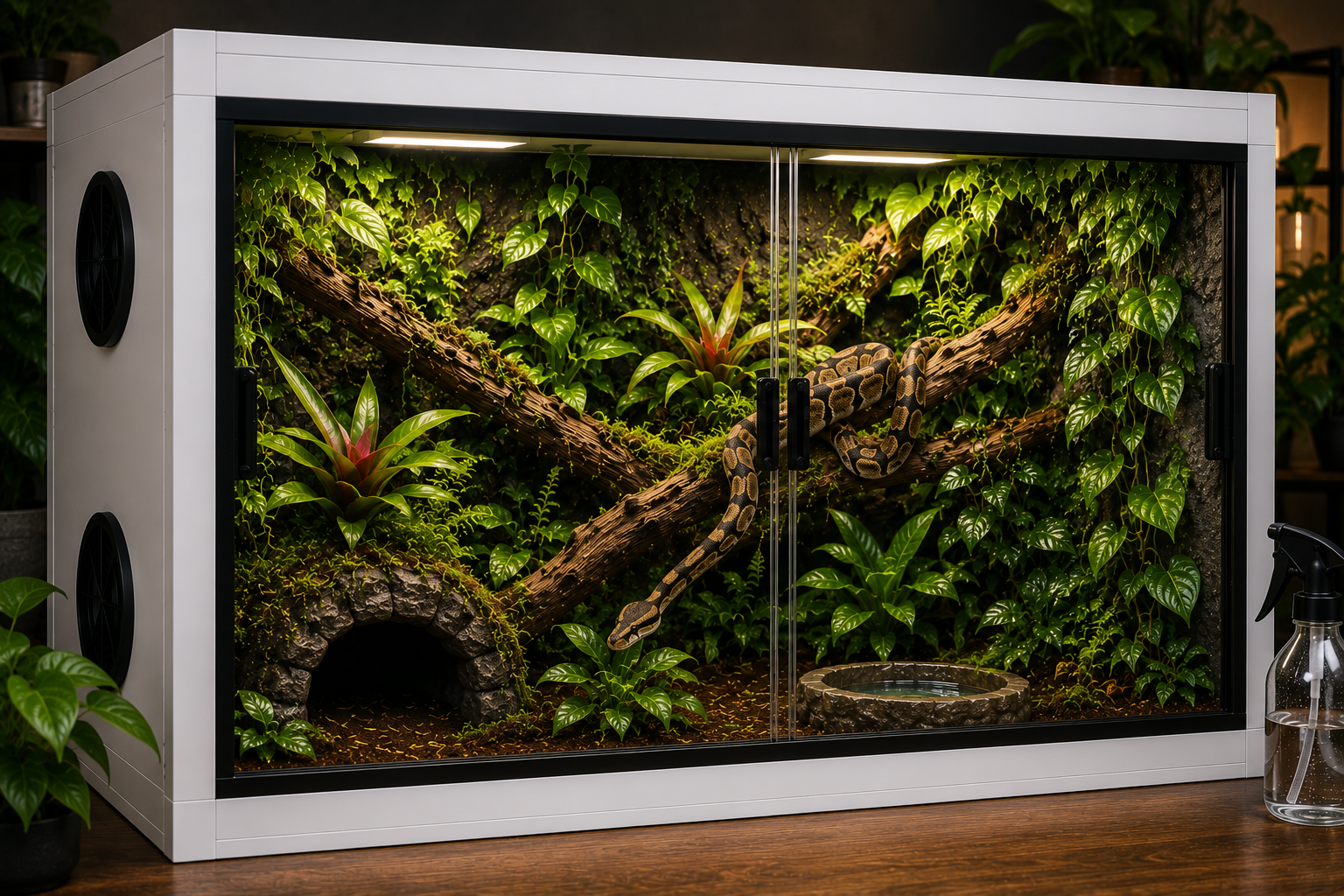
PVC Reptile Enclosures for Tropical Species
PVC reptile enclosures are one of the best housing options for tropical reptiles because they provide excellent heat retention, superior humidity control, and stable environmental conditions. These qualities make it easier to recreate the warm, humid habitats that many tropical species depend on for long-term health and well-being.
Why Tropical Reptiles Have Different Needs
Unlike desert species, tropical reptiles often come from environments where:
Humidity remains relatively high
Temperatures stay consistent
Moisture is available year-round
Environmental fluctuations are minimal
Replicating these conditions in captivity can be challenging, especially in traditional glass tanks.
Why PVC Works So Well for Tropical Habitats
Better Humidity Retention
One of the biggest advantages of PVC is its ability to hold moisture.
Compared to many glass enclosures, PVC:
Reduces moisture loss
Maintains humidity longer
Requires less frequent misting
This is particularly beneficial for reptiles that rely on stable humidity levels.
Excellent Heat Retention
PVC naturally insulates better than glass.
Benefits include:
More stable temperatures
Reduced heat loss
Improved energy efficiency
This helps create a more natural tropical environment.
Greater Environmental Stability
Tropical species often thrive when conditions remain consistent.
PVC helps minimize fluctuations caused by:
Air conditioning
Household heating
Seasonal weather changes
Drafts
Tropical Reptiles That Thrive in PVC Enclosures
Ball Pythons
Ball Python
Although often associated with savanna regions, ball pythons benefit from stable humidity and warm temperatures that PVC enclosures help maintain.
Boa Constrictors
Boa Constrictor
PVC habitats make it easier to maintain the environmental conditions boas require.
Crested Geckos
Crested Gecko
These tropical geckos thrive in environments with consistent humidity and good airflow.
Gargoyle Geckos
Gargoyle Gecko
A PVC enclosure can help maintain the humidity levels needed for healthy sheds and hydration.
Green Tree Pythons
Green Tree Python
These arboreal snakes often benefit from custom PVC habitats with carefully controlled humidity and ventilation.
Emerald Tree Boas
Emerald Tree Boa
Stable environmental conditions are essential for their long-term health.
Key Features to Look For
Controlled Ventilation
Tropical species need airflow, but excessive ventilation can dry out the habitat.
Look for:
Strategically placed vents
Adjustable airflow options
Balanced humidity retention
Front-Opening Doors
Front-opening designs offer:
Easier maintenance
Better accessibility
Reduced disturbance
Deep Substrate Area
Many tropical setups benefit from substrates that help retain moisture.
Examples include:
Coconut husk
Cypress mulch
Bioactive soil blends
Lighting Compatibility
Depending on the species, the enclosure should support:
UVB lighting
Heat lamps
LED plant lighting
Automated misting systems
Creating a Tropical Environment in PVC
Use Moisture-Retaining Substrates
The substrate helps regulate humidity between misting sessions.
Add Live Plants
Bioactive setups often include:
Tropical plants
Mosses
Natural décor
These additions help create a more natural ecosystem.
Provide Large Water Sources
Water bowls can increase humidity through evaporation.
Monitor Conditions
Use:
Digital hygrometers
Thermometers
Thermostats
Consistency is the goal.
PVC vs Glass for Tropical Reptiles
FeaturePVC EnclosureGlass TankHumidity RetentionExcellentModerateHeat RetentionExcellentModerateEnvironmental StabilityExcellentModerateMoisture LossLowHighTropical Setup CompatibilityExcellentGood
For many tropical species, PVC offers clear husbandry advantages.
Common Mistakes to Avoid
Excessive Ventilation
Too much airflow can make humidity difficult to maintain.
Poor Substrate Choices
Dry substrates often lead to unstable humidity levels.
Inadequate Monitoring
Humidity and temperature should always be measured accurately.
Ignoring Species-Specific Needs
Not all tropical reptiles require identical environmental conditions.
Research the exact needs of your species before setting up the habitat.
Visual Example
A properly designed PVC enclosure can recreate the warm, humid conditions tropical reptiles experience in their natural habitats.
Frequently Asked Questions
Are PVC enclosures good for tropical reptiles?
Yes. Many tropical species benefit from PVC's superior humidity and heat retention.
Do tropical reptiles need high humidity?
Many do, but exact humidity requirements vary by species.
Can PVC enclosures support bioactive setups?
Absolutely. PVC is commonly used for bioactive and naturalistic habitats.
Are PVC enclosures better than glass for tropical species?
Many keepers prefer PVC because it simplifies humidity and temperature management.
Do I still need misting systems with PVC?
Some species may still benefit from misting, though PVC often reduces how frequently it's needed.
Conclusion
Tropical reptiles depend on stable temperatures and humidity levels to thrive, and PVC enclosures are uniquely suited to provide those conditions.
By offering excellent insulation, reduced moisture loss, and customizable designs, PVC reptile enclosures make it easier to create healthy, naturalistic habitats for tropical species.
Whether you're keeping geckos, boas, pythons, or other humidity-loving reptiles, a quality PVC enclosure can be one of the most valuable upgrades you make.
