
Kiln-Dried vs Air-Dried Live Edge Slabs: What's the Difference?
Kiln-Dried vs Air-Dried Live Edge Slabs: What's the Difference?
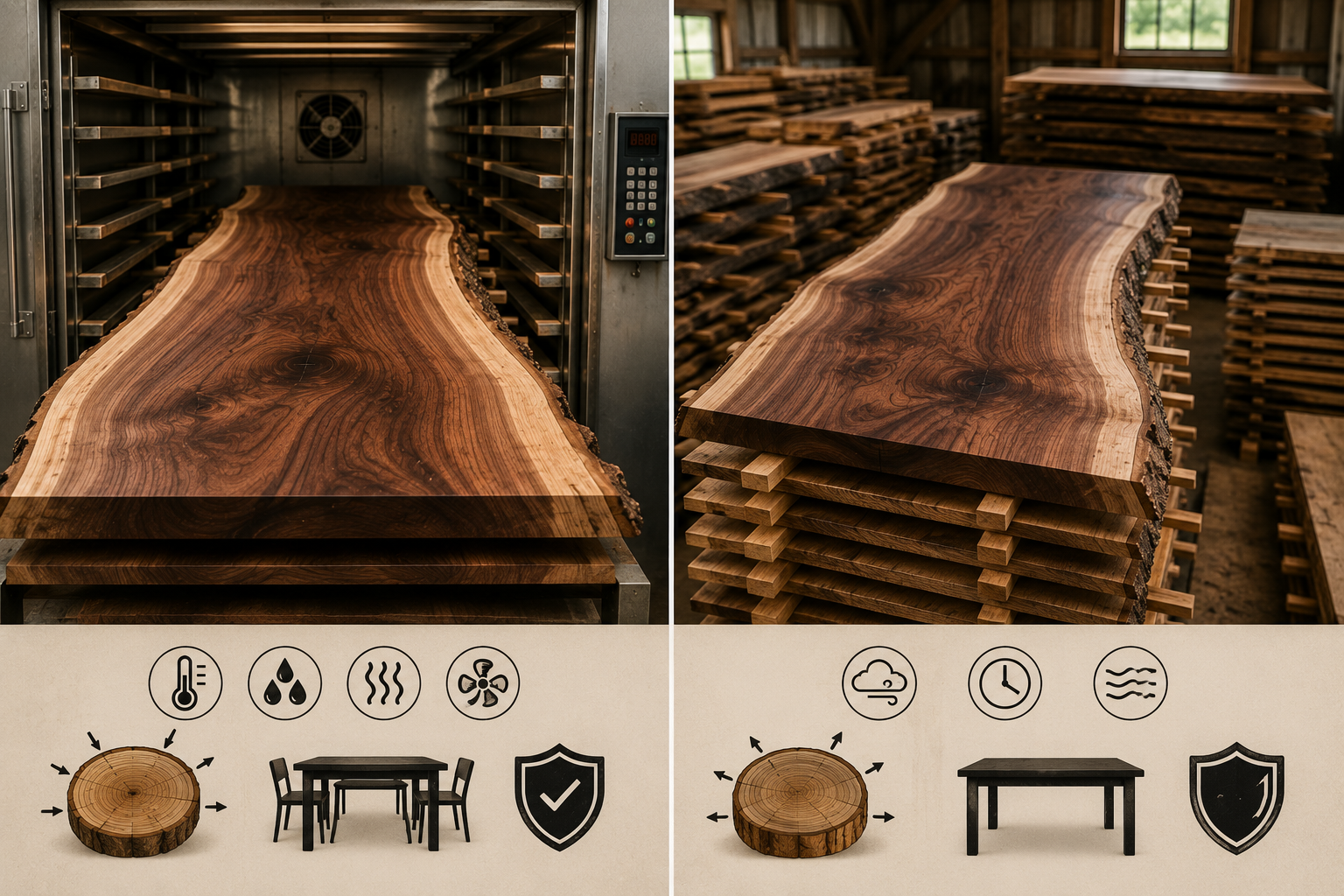
The biggest difference between kiln-dried and air-dried live edge slabs is moisture content. Kiln-dried slabs are dried in a controlled environment, making them more stable and better suited for indoor furniture. Air-dried slabs dry naturally over time and can be an excellent choice for certain projects, but they typically require additional acclimation and may have a higher risk of movement if not properly prepared.
Why the Drying Process Matters
A beautiful live edge slab is only as good as its stability.
No matter how stunning the grain pattern or how rare the wood species, excessive moisture can cause problems after your project is complete.
Wood naturally expands and contracts as humidity changes. If a slab contains too much moisture, it may:
Warp
Twist
Crack
Cup
Shrink
Develop gaps around joints
Understanding how a slab is dried helps you choose the right material for your project and avoid costly issues later.
What Is a Kiln-Dried Live Edge Slab?
Kiln drying is a controlled process that uses heat, airflow, and humidity management to remove moisture from wood.
The slab is placed inside a specialized kiln where temperature and humidity are carefully adjusted over time until the desired moisture content is reached.
This controlled environment helps produce lumber that is more stable for indoor use.
Benefits of Kiln Drying
Lower moisture content
Greater dimensional stability
Faster drying process
Reduced risk of insects
Reduced chance of fungal growth
Better performance in climate-controlled homes
Kiln-dried slabs are the preferred choice for most interior furniture projects.
What Is an Air-Dried Live Edge Slab?
Air drying is the traditional method of seasoning lumber.
Freshly cut slabs are stacked with spacers, known as stickers, between each layer to allow air to circulate.
The wood then dries naturally over months or even years, depending on:
Thickness
Wood species
Local climate
Airflow
Weather conditions
Air drying is slower but remains a respected method used by many sawmills and woodworkers.
Kiln-Dried vs Air-Dried: Side-by-Side Comparison
FeatureKiln-DriedAir-DriedDrying TimeWeeksSeveral months to yearsMoisture ContentLower and more consistentHigher and varies by environmentStabilityExcellentGood when properly acclimatedIndoor FurnitureHighly recommendedMay require additional dryingRisk of WarpingLowerHigher if moisture remains elevatedInsect ControlBetterDepends on storage conditionsAvailabilityWidely available from specialty suppliersCommon from local sawmillsTypical CostUsually higherOften lower
Both methods can produce quality lumber, but each serves different needs.
Moisture Content Explained
Moisture content refers to the amount of water remaining inside the wood.
For indoor furniture, most professionals recommend wood that has reached a moisture level appropriate for climate-controlled interiors.
Kiln drying allows suppliers to achieve a more consistent moisture content, reducing the likelihood of movement after installation.
Air-dried slabs may continue adjusting to indoor humidity levels once brought inside, especially if they haven't fully acclimated.
Stability and Performance
Kiln-Dried Slabs
Because kiln drying removes more moisture under controlled conditions, these slabs generally offer:
Better dimensional stability
Reduced seasonal movement
Less shrinkage
Improved reliability for fine furniture
This makes them especially suitable for projects requiring tight joinery and precise dimensions.
Air-Dried Slabs
Properly air-dried slabs can also perform well, particularly when they've had sufficient time to season and acclimate.
Many woodworkers appreciate air-dried lumber because they believe it preserves certain natural characteristics of the wood.
However, additional preparation may be necessary before building furniture.
Appearance
One common question is whether kiln drying changes the appearance of wood.
In most cases, both kiln-dried and air-dried slabs retain their beautiful grain patterns.
Natural variations in:
Color
Figure
Live edge
Knots
Character markings
remain part of the slab regardless of the drying method.
The biggest visual differences usually come from the wood species itself rather than how it was dried.
Which Is Better for Live Edge Furniture?
Kiln-Dried Is Best For
Dining tables
Coffee tables
Office desks
Fireplace mantels
Floating shelves
Kitchen islands
Bathroom vanities
Built-in furniture
Its stability makes it ideal for projects inside heated and air-conditioned homes.
Air-Dried Is Best For
Rustic furniture
Decorative pieces
Certain woodworking projects
Experienced woodworkers with moisture-testing equipment
Some professionals also prefer air-dried slabs that will receive additional drying before use.
Cost Comparison
Kiln-dried slabs usually cost more because the drying process requires specialized equipment, energy, and careful monitoring.
Air-dried slabs are often less expensive, but additional preparation—such as further drying, flattening, or acclimation—may offset the initial savings.
When comparing prices, consider the total project cost rather than just the purchase price of the slab.
Can You Use Air-Dried Slabs Indoors?
Yes—but with precautions.
Before using an air-dried slab indoors:
Check its moisture content.
Allow it to acclimate to the indoor environment.
Store it flat with proper airflow.
Inspect for movement before beginning construction.
These steps help reduce the risk of future problems.
Tips for Buying a Live Edge Slab
Whether choosing kiln-dried or air-dried wood:
Buy from a reputable supplier.
Ask how the slab was dried.
Request moisture content information.
Review photos of the exact slab.
Inspect for cracks or excessive warping.
Confirm dimensions before ordering.
A trustworthy supplier should be happy to answer these questions.
Common Mistakes to Avoid
Assuming Every Slab Is Ready to Use
Even kiln-dried slabs benefit from acclimating to your workshop or home before construction begins.
Ignoring Moisture Content
Never begin building without understanding the slab's moisture level, especially for indoor furniture.
Buying Based Only on Price
Lower-cost lumber isn't always the best value if it requires extensive preparation or develops movement later.
Improper Storage
Store slabs flat, supported evenly, and away from excessive moisture or direct sunlight while they acclimate.
Frequently Asked Questions
Is kiln-dried wood always better?
For most indoor furniture projects, kiln-dried wood is generally the preferred option because of its stability and consistent moisture content. However, well-seasoned air-dried wood can also perform very well when properly prepared.
Can air-dried slabs crack?
They can if moisture levels are too high, if they dry unevenly, or if they're exposed to rapid changes in temperature or humidity.
How do I know if a slab is kiln dried?
Ask the supplier directly. Reputable sellers typically state whether the slab has been kiln dried and may provide moisture content information.
Which is better for a dining table?
Kiln-dried slabs are usually the best choice for dining tables because they are less likely to warp, shrink, or crack after being moved into a climate-controlled home.
Conclusion
Both kiln-dried and air-dried live edge slabs have their place in woodworking, but understanding the differences is essential before starting your project. Kiln-dried slabs provide greater stability, consistent moisture content, and dependable performance for indoor furniture, making them the preferred choice for dining tables, desks, mantels, and other fine woodworking projects.
Air-dried slabs can also produce exceptional results, particularly when they've been properly seasoned and acclimated. For many DIY builders and homeowners, however, investing in a kiln-dried slab offers added peace of mind and helps reduce the risk of future movement or structural issues.
Choosing the right drying method ensures your live edge project not only looks beautiful on day one but continues to perform well for years to come.
