
PVC Enclosures for Ball Python Humidity Problems
PVC Enclosures for Ball Python Humidity Problems
If you're struggling to keep humidity high enough for your ball python, a PVC enclosure can be one of the most effective solutions. PVC naturally retains heat and moisture better than traditional glass tanks, helping create the stable environment that ball pythons need for healthy shedding, hydration, and overall well-being.
Why Humidity Is So Important for Ball Pythons
Ball Python naturally come from regions with relatively stable humidity levels.
In captivity, proper humidity supports:
Healthy sheds
Hydration
Respiratory health
Skin condition
General comfort
When humidity remains too low for extended periods, problems can develop.
Common Signs of Low Humidity
Many ball python owners notice:
Incomplete sheds
Retained shed around the tail or eyes
Dry skin appearance
Increased soaking behavior
Difficulty maintaining consistent humidity readings
If you're constantly misting but humidity still drops quickly, the enclosure itself may be part of the problem.
Why Glass Tanks Often Cause Humidity Problems
Large Screen Tops
Many glass tanks feature mesh lids that allow:
Moisture to escape
Heat to escape
Humidity to drop rapidly
This creates a constant battle to keep conditions stable.
Poor Insulation
Glass loses heat much faster than PVC.
When temperatures fluctuate:
Humidity becomes less stable
Moisture evaporates more quickly
Environmental conditions become harder to control
Excessive Airflow
Air conditioning, ceiling fans, and household airflow can have a major impact on glass enclosures.
This often leads to humidity swings throughout the day.
How PVC Enclosures Solve Ball Python Humidity Issues
Better Moisture Retention
PVC enclosures typically have:
Solid walls
Better sealing
Controlled ventilation
This helps retain humidity for much longer periods.
Improved Heat Retention
PVC insulation helps maintain:
Warm-side temperatures
Cool-side temperatures
Stable environmental conditions
Since heat and humidity work together, improved temperature stability often results in improved humidity stability.
Reduced Need for Constant Misting
Many ball python keepers report:
Less frequent misting
More consistent humidity readings
Easier enclosure maintenance
The enclosure naturally does a better job of holding moisture.
Ideal PVC Enclosure Size for Ball Pythons
For most adult ball pythons, a:
4x2x2 PVC enclosure (48" x 24" x 24")
provides:
Adequate floor space
Proper temperature gradients
Room for enrichment
Better humidity management
Many keepers consider this the ideal long-term setup.
Additional Ways to Improve Humidity in a PVC Enclosure
Use Moisture-Retaining Substrate
Popular options include:
Coconut husk
Cypress mulch
Bioactive soil blends
These substrates help release moisture gradually.
Provide a Large Water Bowl
Water dishes increase humidity through natural evaporation.
Add a Humid Hide
Humid hides can provide localized moisture during shedding periods.
Monitor Conditions Carefully
Use:
Digital hygrometers
Thermometers
Reliable thermostats
Accurate readings help maintain consistency.
PVC vs Glass for Ball Python Humidity
FeaturePVC EnclosureGlass TankHumidity RetentionExcellentModerateHeat RetentionExcellentModerateMoisture LossLowHighEnvironmental StabilityExcellentModerateMaintenance EffortLowerHigher
For many ball python keepers, the difference is immediately noticeable.
Why So Many Ball Python Owners Upgrade to PVC
Common reasons include:
Easier Humidity Management
One of the biggest benefits.
Better Shedding Success
Stable humidity supports healthier sheds.
Reduced Maintenance
Less time spent misting and adjusting conditions.
More Stable Habitat
Ball pythons thrive when environmental conditions remain consistent.
Common Mistakes to Avoid
Over-Misting
Constantly soaking the enclosure can create overly wet conditions.
Focus on stable humidity rather than temporary spikes.
Ignoring Ventilation
Even humidity-loving reptiles need proper airflow.
Using Dry Substrates
Not all substrates help retain moisture effectively.
Relying on Analog Gauges
Digital monitoring equipment is generally much more accurate.
Visual Example
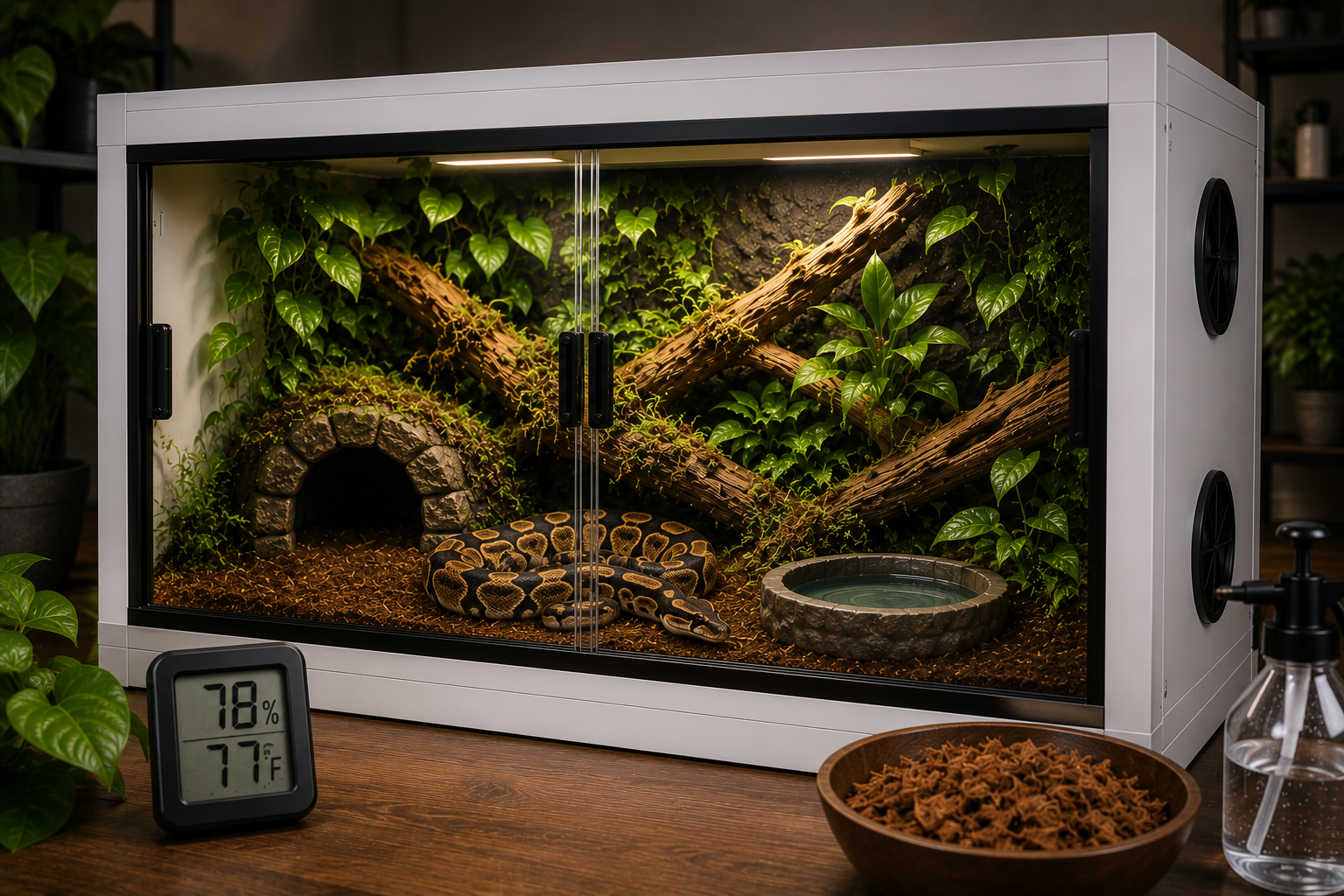
A properly designed PVC enclosure helps create stable humidity levels while reducing the daily maintenance often required with glass tanks.
Frequently Asked Questions
What humidity should a ball python enclosure maintain?
Humidity requirements can vary slightly, but consistent moderate-to-high humidity is generally recommended for healthy shedding and hydration.
Do PVC enclosures really help with humidity?
Yes. Many keepers switch specifically because PVC retains moisture much more effectively than glass.
Is a 4x2x2 PVC enclosure good for a ball python?
Yes. It's widely considered one of the best long-term enclosure sizes for adult ball pythons.
Will I still need to mist a PVC enclosure?
Possibly, but many keepers find they need to mist less often.
Are PVC enclosures worth the investment?
For ball python owners struggling with humidity, many consider PVC one of the most worthwhile upgrades available.
Conclusion
Humidity problems are one of the most common challenges faced by ball python keepers, and in many cases, the enclosure itself is the root cause.
PVC enclosures provide better insulation, improved moisture retention, and greater environmental stability than traditional glass tanks. As a result, maintaining proper humidity becomes easier, shedding issues become less common, and overall husbandry often improves significantly.
For ball python owners tired of constantly chasing humidity levels, upgrading to a PVC enclosure can be a game-changing solution.
